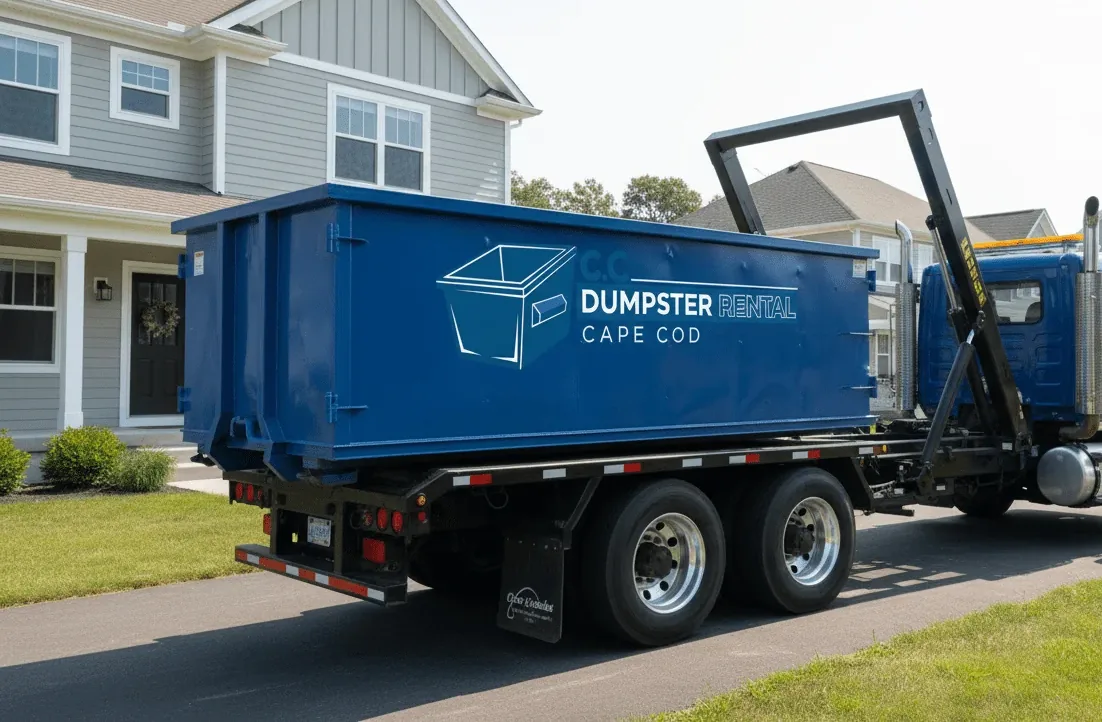
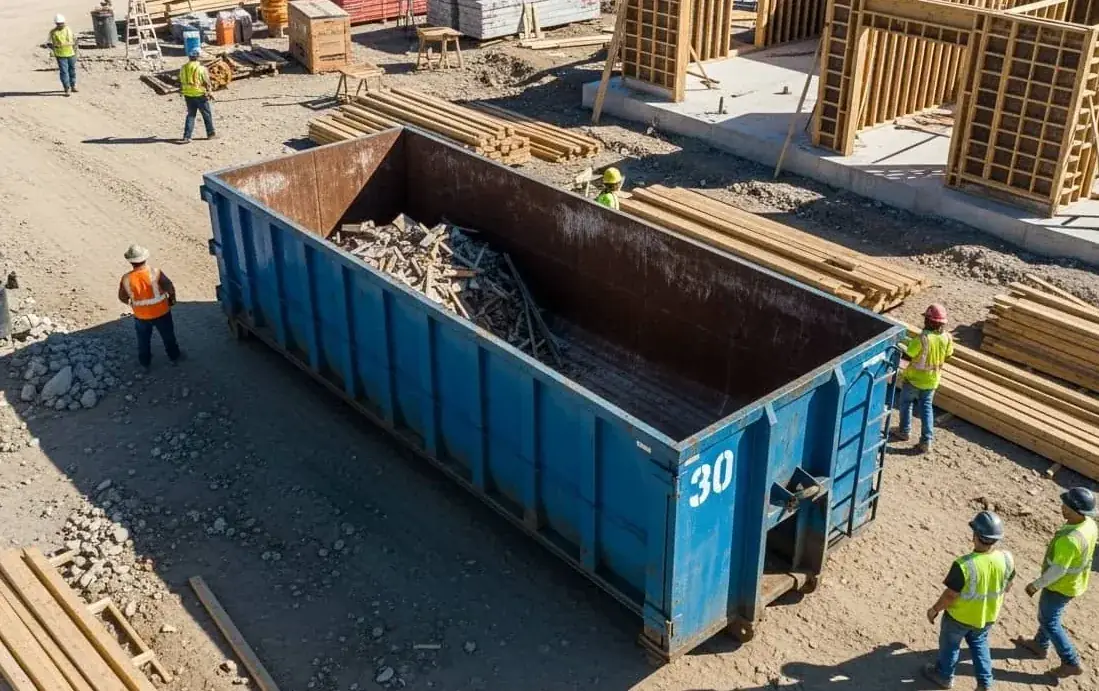
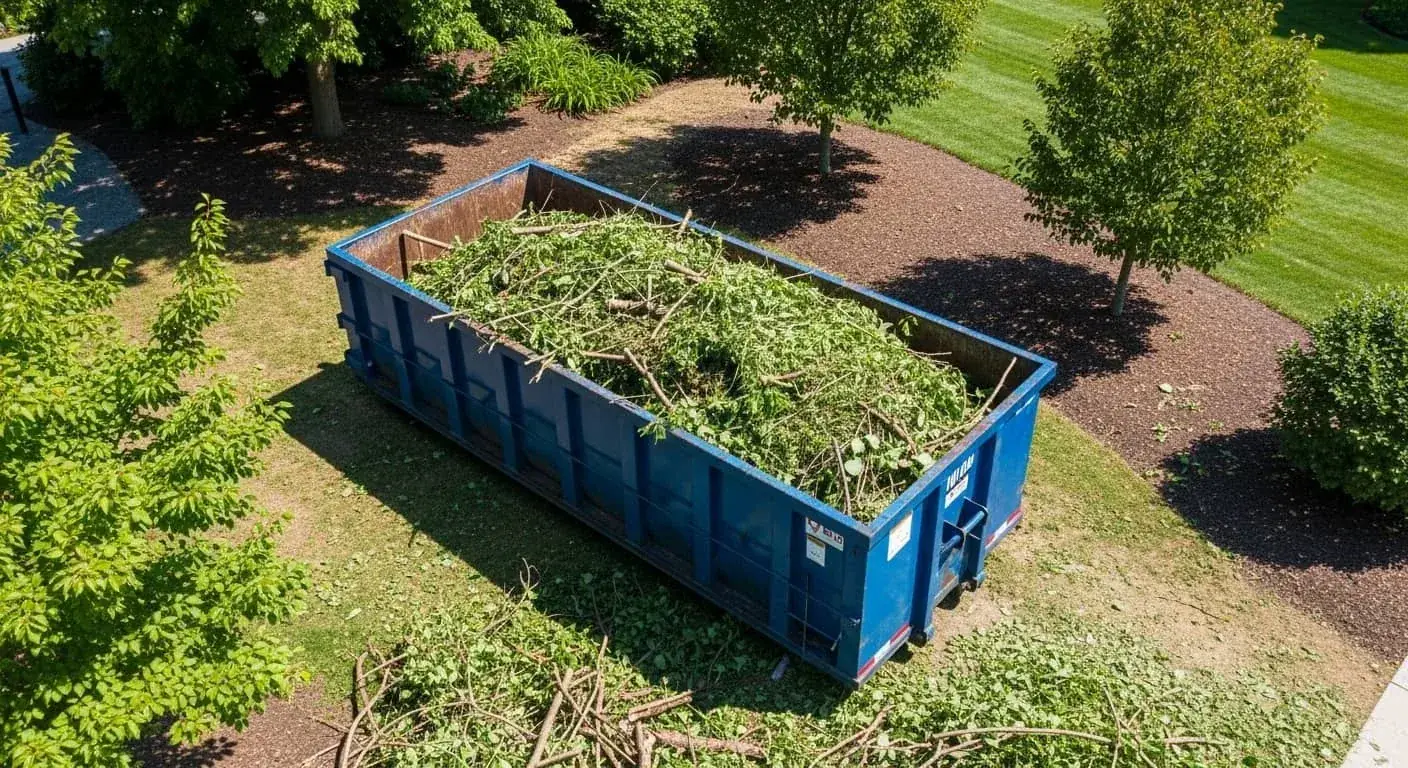
Two numbers decide whether a dumpster rental goes smoothly: how much room your debris takes up, and how much it weighs. Most sizing advice only deals with the first. That is why people rent a 40 yard container for a broken patio and run out of allowance before the floor is covered, then squeeze a garage full of furniture into a 10 yard box and call for a second one on Sunday. Both errors share a blind spot, and both are avoidable with arithmetic you can do at the kitchen table.
Volume and weight are two separate limits
Every roll-off has a physical capacity measured in cubic yards and a disposal allowance measured in tons. The two are independent. Whichever you reach first ends the job, and which one that is depends entirely on the material going in.
The spread is bigger than people expect. Load a 20 yard box with sofas, cardboard and torn-out insulation and you can heap it over the rails while staying under a ton. Load that same container a tenth full with broken concrete and you have passed its included tonnage.
The big sizes are volume containers. A 40 yard box is 22 ft long × 8 ft wide × 8 ft high with 4-5 tons included: enormous space, a modest weight ceiling. The small ones are weight containers. A 10 yard is 12 ft long × 8 ft wide × 3.5 ft high with 1-2 tons included and low walls you can pitch heavy material over. That is why a 40 is the wrong answer for a concrete slab and a 10 is the right one, even though the concrete job feels bigger.
The first question is never how big the job is. It is what the material is.
The five sizes, side by side
Notice what happens between the 20 and the 40. The footprint never changes: all three large boxes are twenty-two feet long. The extra capacity is sidewall height, and tonnage climbs slowly while volume climbs fast. Detail sits on the 10 yard, 15 yard, 20 yard, 30 yard and 40 yard pages, and the size lineup puts them in one place.
Estimating volume from the project you actually have
Cubic yards mean nothing until you tie them to something you can see. Four conversions cover most residential work.
- By room. One room stripped of finishes runs 8 to 12 cubic yards. A standard kitchen with cabinets, counter and floor lands at 10 to 15. A whole first floor taken back to the studs is 18 to 25.
- By roofing square. Budget roughly one cubic yard per square of single-layer tear-off. That is why a 20 yard handles about 20 to 24 squares, a typical Cape roof.
- By deck. About a cubic yard for every 15 square feet, including railings, stairs and substructure. A 12 by 16 foot platform comes in near fifteen yards.
- By pickup load. A heaped six-foot bed is roughly two and a half cubic yards. Count the trips you would otherwise make, then use the table above.
The mental model that works best is the garage bay. A single-car bay is about 10 by 20 feet, and debris piled three feet deep across it is around 22 cubic yards, so a 20 yard box is that bay filled to just below waist height. Stage the pile before you order if you can, then add a third: loose debris never compacts the way it looks like it will.
What your debris actually weighs
Weight is the number nobody checks and the one that generates overage charges. The figures below are approximate, and moisture moves all of them: soaked carpet and wet soil run above the top of these ranges. The federal EPA volume-to-weight conversion factors are the reference point for the lighter categories, and the MassDEP waste disposal bans govern which of them can go in the box at all.
Three jobs, worked through
A full roof. Twenty-four squares of single-layer architectural shingle at roughly 380 pounds a square is 6,600 pounds, or 3.3 tons. That fits a 20 yard on volume and sits at the edge of the 2-3 tons included on weight, which is why we ask about layers before quoting. A hidden second layer takes the same roof to 6.6 tons without adding bulk. Our roof tear-off guide covers counting squares, and roofing dumpster rental explains how we stage tear-offs.
A concrete patio. A 12 by 16 foot slab four inches thick is 64 cubic feet, about 2.4 cubic yards. At 4,000 pounds a yard that is 9,500 pounds, nearly five tons out of a slab most people call small. A 30 yard does not raise your allowance; it only gives you room to overload. Masonry gets quoted by weight through heavy debris service, usually a 10 yard box with the fill level agreed before the first bucket.
A whole-house cleanout. A three or four bedroom property with furniture, storage and the garage runs about 30 cubic yards. At 250 pounds a yard that is under four tons, inside a 30 yard container's 3-4 tons. Volume and weight landing together is the sign you picked correctly. Estate cleanout service handles the items state rules require to be kept separate.
Project type to container size
The sizing mistakes that cost real money
Renting small to save money. The gap between a 15 and a 20 is a fraction of what a second delivery, a second disposal ticket and a lost afternoon cost. If your estimate lands between two sizes and the debris is light, take the larger one. Our Cape Cod cost breakdown compares the increments.
Renting large for heavy debris. The costlier error. A bigger box for concrete or soil buys space you are not legally allowed to fill, because the truck has road weight limits and an overloaded box cannot leave your driveway.
Forgetting the second layer of shingles. Check at a rake edge or a vent flashing before you order. Two layers doubles the tonnage and changes the recommendation immediately.
Forgetting the shed. Garage cleanouts become garage-and-shed cleanouts almost every time, and so do basements with a crawlspace.
Underestimating a whole-house cleanout. Forty years in one property produces far more than anyone predicts. Families clearing an inherited home start with a 15 and finish with a 30.
What fits on a Cape Cod property
The box is only half the space question. The truck has to back in straight, tip its rails and winch the container off, and it cannot do that around a curve. Plan on about 22 ft of length and 10 ft of width for a 10 yard, 26 ft for a 15, 34 ft for a 20 or a 30 (the 30 wants an extra foot of width for the rear door), and about 36 ft of length and 12 ft of width for a 40, always including room for the truck to load and unload.
Overhead is the constraint people forget. The hoist reaches roughly 23 to 25 feet during the drop and again at pickup. Pitch pine limbs, a low service drop, a carport roof: any of those stops delivery cold. Stand where you want the box and look straight up.
Underfoot, this is sand. Crushed shell and pea stone shift under two loaded rails, and soft shoulders give way after a nor'easter. Plywood cribbing is standard on every drop and protects sealcoat and pavers as much as the footing. Narrow lanes in Falmouth and the older Outer Cape villages often decide the size for you: a 22 ft container will not park there, so two loads in a 15 beats one in a 20. And no loaded container ever sits over a septic tank, distribution box or leach field — Cape systems are shallow, and the state's Title 5 septic system guidance explains what is worth protecting.
When "go one size up" is bad advice
The rule is sound for light, bulky, unpredictable debris — cleanouts, renovations, storm work, anything where more keeps appearing. Sizing up there costs little and saves a lot.
It is wrong in three cases. Dense material, for the reason above: you cannot buy tonnage with volume. A driveway that will not take the extra length. And hand-loading — a 30 yard has six feet of sidewall and a 40 has eight, both above shoulder height, so a 20 you can throw over the rail may finish faster than a 30 you have to climb.
Swap-outs versus one bigger container
When the volume exceeds one box, there are two ways to handle it. A swap-out keeps a container on site continuously: we pull the full one and set an empty the same day, which is how multi-week jobs run under construction dumpster rental. One bigger container is simpler and usually cheaper when the work has a defined end.
Swaps win when weight is the binding limit — masonry, soil, shingles — because each haul carries its own allowance. Bigger wins when volume is the limit. Mixed jobs sometimes want both: a 10 yard for the heavy fraction and a 20 or 30 for everything else, which sounds excessive until you price the overage on one mixed load.
Describe the pile and we will size it in two minutes, including telling you when a smaller box is the right call. Call (774) 208-0570 for a flat quote covering delivery, the rental period, pickup and disposal up to the stated tonnage, or find us on the contact page. Same-day and next-day delivery is available across Barnstable County when the schedule allows.