
Cape Cod service
Commercial Dumpster Rental for Cape Cod Businesses
Roll-off containers and scheduled swap-outs for retail, food service, lodging, marinas and property management across Barnstable County, sized to your season and your loading dock.
- Licensed & insured
- Same-day on the Upper Cape
- Flat-rate pricing
- All 15 Cape towns
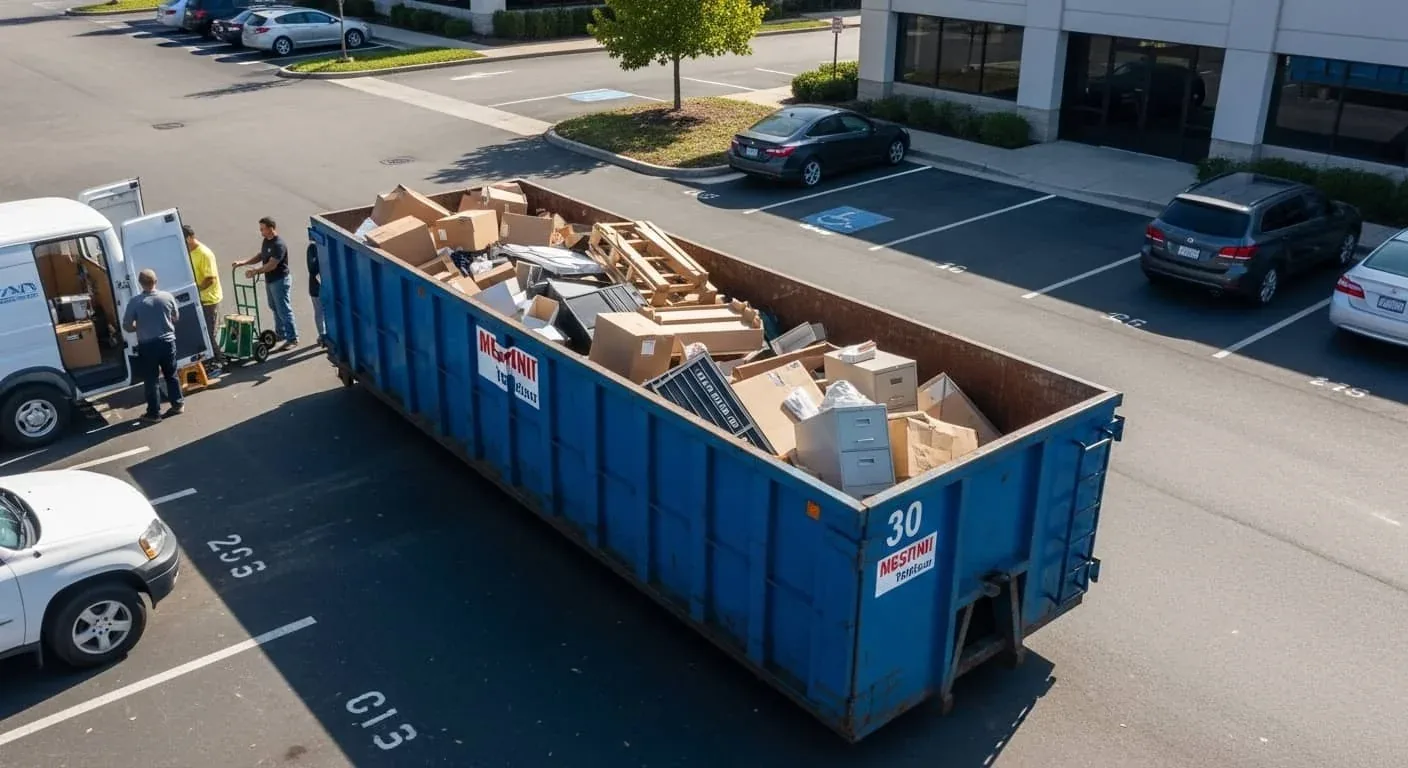
Commercial Dumpster Rental across all fifteen Cape Cod towns
A business does not get to shut down while debris piles up. The gift shop still opens at ten, the dining room still seats at five, and the inn still turns twelve rooms on a Saturday. Commercial container service on Cape Cod has to fit around that rhythm, which means predictable swap schedules, drivers who know which alleys a roll-off truck can actually back into, and a quote that does not change every month.
CC Dumpster Rental Cape Cod has run containers for Barnstable County businesses since 2011 — restaurant remodels in Hyannis, motel refits in Yarmouth, boatyard cleanups on the Falmouth waterfront, and standing service for property managers juggling thirty seasonal units. Pricing is flat and includes delivery, the rental period, pickup and disposal up to the stated tonnage. Sizes run 10 to 40 yards. Call (774) 208-0570 for a quote that accounts for your access, your season, and your material.
At a glance
What you get with commercial dumpster rental
- Flat-rate commercial quotes with no hourly billing
- Same-day and next-day swap-outs to keep crews working
- Early morning and after-hours placement around business hours
- Standing service schedules for seasonal shops, inns and marinas
- Drivers experienced with tight alleys, docks and boatyard aprons
- Sizes 10 to 40 yards, matched to lot space not just volume
- Licensed and insured, locally owned in East Falmouth since 2011
- Scale tickets available for disposal documentation
How Business Container Service Gets Quoted
Commercial quotes start with three questions: what material, how often, and how much room the truck has. A one-time remodel container is priced as a flat rental — delivery, the rental window, haul, and disposal up to the included tonnage. Recurring service for a business that generates steady volume is priced per swap, with a schedule you set.
What moves the price is rarely the box itself. It is the tonnage, the drive, and the difficulty of the placement. A container behind a Hyannis restaurant that needs a 6 a.m. swap before deliveries block the lot costs more to service than one sitting in an open lot off Route 28, and honest pricing says so rather than burying it. Nothing here is billed by the hour.
Seasonal businesses get a fourth question: how long is your season? A shop that runs Memorial Day to Columbus Day does not need a twelve-month agreement. Many Cape operators run a large one-time container in the shoulder months and lighter service in between. If you are comparing sizes across locations, the container size guide lists footprints, and the cost breakdown for Cape Cod explains what actually drives a number up. Call and we will build the schedule around your calendar instead of ours.
Retail Fixtures, Kitchen Tear-Outs, and Guest Room Refits
Commercial loads look nothing like household ones. A retail refit means shelving, slat wall, display cases, signage, old carpet tile, and a mountain of cardboard. A restaurant remodel means dining room furniture, banquette foam, ceiling tile, damaged prep tables, and stripped-out flooring. An inn or motel refit means bed frames, casegoods, drapes, bathroom fixtures, and dozens of rooms' worth of carpet.
All of that loads normally. Where commercial jobs go sideways is the smaller stuff hiding in a back room: half-drums of fryer oil, hood cleaning chemicals, pool sanitizer at a motel, bottom paint and solvent at a marina, propane for the patio heaters. None of that goes in a roll-off. Refrigeration units, ice machines and walk-in condensers need refrigerant recovered by a certified technician first, and commercial mattresses fall under the state ban like residential ones.
Two loads, not one
The cleanest approach on a big commercial job is separating the mixed debris container from anything requiring special handling. Where a job is genuinely structural, a demolition debris container is the right call, and a straightforward furniture-and-fixture clear-out is often faster as full-service junk removal with our crew doing the carrying.
Tonnage, Overage, and the Wet-Load Problem
Every container comes with a tonnage allowance. Go past it and the extra is billed per ton at the scale rate, with the ticket available. For most commercial loads the box fills long before the weight matters — fixtures, furniture, cardboard and ceiling tile are bulky and light.
Three commercial materials break that pattern. Ceramic tile and thinset from a bathroom or kitchen refit are dense enough to fill the tonnage in a fraction of the box. Old commercial flooring — layered vinyl composite tile with decades of adhesive and leveling compound — is heavier per square foot than anyone expects. And wet material is the persistent one: an uncovered container behind a restaurant collects rain, and cardboard and carpet act like sponges.
The practical answers are boring and effective. Break down cardboard so it packs flat instead of bridging. Keep a tarp on the box between fills on a wet forecast. Do not let staff use an open remodel container as overflow for daily trash, which is how a construction load quietly becomes a wet food-waste load. Massachusetts also restricts commercial food material from disposal, so kitchen organics belong in your organics program, not the roll-off. Genuinely heavy demo goes in a dedicated heavy debris container sized for weight rather than volume.
Backing In: Docks, Alleys, Marina Yards and Inn Lots
Placement is where commercial jobs are won or lost. A roll-off truck needs roughly sixty feet of straight-line room to set or retrieve a container, ten to twelve feet of width, and clear height above — the box tilts well above roof level coming off the rails.
That runs into real Cape conditions. Restaurant service alleys off Main Street in Hyannis are narrow and shared with grease and linen pickups. Motel courtyards along Route 28 are ringed with balconies, canopies and light poles. Marina and boatyard aprons are often sand and crushed shell that soften in spring, and a loaded box can settle. Inn parking lots in Provincetown and Chatham are tight enough that losing four spaces to a container in July costs real revenue.
Practical fixes: place containers on the least-used corner of the lot rather than the closest door; cone off the approach the night before a swap; schedule swaps before opening or after close; and put down cribbing on soft aprons. Overhead service drops and low canopies are the single most common cause of a truck arriving and being unable to set the box. Send a photo of the intended spot when you call — it takes thirty seconds and prevents a wasted trip. Our notes on placement and surface protection apply to commercial lots too.
Running a Business on a Seasonal Peninsula
The Cape's economy compresses into about sixteen weeks, and waste volume follows the same curve. Understanding that curve is most of what separates a smooth season from a bad one.
April and May are opening season: shops restock and dump last year's fixtures, inns refresh rooms, marinas clear winter shrink wrap and shop debris, and restaurants do the remodel they could not do in July. June through August is pure volume with no room for downtime — swaps need to be fast and off-hours, and traffic over the Bourne and Sagamore bridges plus Route 6 dictates delivery windows more than anything else. September through November is closing season and the practical window for anything structural. December through March is when contractors are available and containers can sit for weeks without costing you parking.
Property managers running seasonal rental portfolios feel this hardest, with turnover cleanouts stacked between bookings. Our summer turnover cleanout guide covers that workflow, and when a changeover goes wrong on a Friday, same-day service exists for exactly that. Coverage across every town is listed on the service area page.
Scheduling, Swap-Outs, and Standing Service
Commercial accounts run on a simple loop.
- Call (774) 208-0570 with your address, material type, and access description. Photos of the intended spot help. You get a flat number on that call.
- Set the drop. Choose a spot that survives a busy Saturday, not just a quiet Tuesday. Cone it, and tell staff not to park there.
- Fill and call for a swap. On a demo or refit, a full box swapped same-day or next-day keeps the crew working. On standing service, we come on your set day without a call.
- Final pickup. One call ends the rental. Disposal documentation is available if your project or landlord requires it.
A few things make the loop reliable: name one contact person so drivers are not chasing a manager mid-shift; keep loads level with the top rail so the tarp closes; and flag any change in your season early so we can adjust the schedule instead of guessing. Businesses in Hyannis and the surrounding villages often run tighter swap cycles because volume is higher and lot space is smaller. Questions about scheduling, documentation or access are answered fastest by phone, and common ones are collected on our FAQ page.
Suitability
Is commercial dumpster rental the right call?
The fastest way to get this right is to check the load against both lists before you book.
Good fits for this container
- Retail store fixture removal and shop refits
- Restaurant and bar remodels and kitchen tear-outs
- Motel, inn and hotel guest room refurbishments
- Marina, boatyard and waterfront property cleanups
- Property management turnover and unit cleanouts
- Office relocations and end-of-lease clear-outs
- Seasonal opening and closing cleanups for summer businesses
Send these somewhere else
- Commercial food material and kitchen organics, which Massachusetts restricts from disposal — route these to your organics hauler
- Fryer oil, grease trap waste, hood cleaning chemicals and degreasers
- Marine bottom paint, solvents, antifreeze and fuel from boatyard operations
- Refrigeration units, ice machines and walk-in coolers until refrigerant is recovered by a certified technician
- Commercial mattresses and textiles, both banned from Massachusetts disposal since November 2022
- Fluorescent tubes, ballasts, batteries and electronic waste, which require dedicated recycling channels
Sizing
Which container for commercial dumpster rental?
Every size below runs on this service. Match the material to the weight allowance and the volume takes care of itself.
- 10 yard — Small footprint jobs where lot space is the constraint — a single guest bathroom refit, a shop counter replacement, or a container that has to fit in two parking spaces during business hours.
- 15 yard — A restaurant dining room refresh, a small retail fixture swap, or a batch of guest rooms stripped of furniture and carpet over a slow week.
- 20 yard — The workhorse for a full restaurant kitchen tear-out or a motel wing refit. Low enough walls that staff can load fixtures without a ramp, still compact enough for a service alley.
- 30 yard — Multi-unit turnovers, a whole-floor office clear-out, or a marina yard cleanup where volume is high and material is bulky rather than dense.
- 40 yard — End-of-lease clear-outs and full property refits with weeks of accumulated bulk. Best where you have open lot space and a light, voluminous load.
| Size | Dimensions | Capacity | Weight included | Best for |
|---|---|---|---|---|
| 10 Yard Dumpster | typically about 12 ft long × 8 ft wide × 3.5 ft high | about 3-4 pickup truck loads | 1-2 tons | Heavy, dense debris and tight driveways: concrete, brick, tile, one-room gut. |
| 15 Yard Dumpster | typically about 16 ft long × 8 ft wide × 4 ft high | about 4-6 pickup truck loads | 2 tons | Two-room remodels, garage and shed cleanouts, small roof tear-offs. |
| 20 Yard Dumpster | typically about 22 ft long × 8 ft wide × 4.5 ft high | about 6-8 pickup truck loads | 2-3 tons | Full roof replacement, whole-floor renovation, three or four bedroom cleanout. |
| 30 Yard Dumpster | typically about 22 ft long × 8 ft wide × 6 ft high | about 9-12 pickup truck loads | 3-4 tons | Cottage gut renovation, whole-house estate cleanout, storm debris, demolition. |
| 40 Yard Dumpster | typically about 22 ft long × 8 ft wide × 8 ft high | about 12-16 pickup truck loads | 4-5 tons | Structural demolition, commercial and multi-unit work, high-volume bulky debris. |
Commercial Dumpster Rental — the Cape Cod specifics
Barnstable County businesses live inside a regional planning framework that shapes what gets built and when. The Cape Cod Commission reviews larger development across all 15 towns, which is one reason commercial remodels here tend to be phased into the off-season rather than done all at once. Coastal and historic districts add their own review layers, particularly along Route 6A.
On the waste side, Massachusetts keeps an enforceable list of materials that cannot be landfilled or incinerated, published as the MassDEP waste disposal bans. For commercial operators the relevant entries are food material, cardboard and paper, metals, containers, mattresses, textiles, and clean gypsum wallboard. Loads arriving at a transfer facility with banned material can be rejected or surcharged, and that cost lands on the generator.
Practically, that means a remodel container should stay a remodel container. Keeping daily kitchen waste, cardboard and organics out of the roll-off protects your disposal cost and keeps the load clean. Businesses in Falmouth and the Upper Cape can usually get faster turns than the Outer Cape simply because of drive time.
Talk to a real person
Need commercial dumpster rental on Cape Cod?
Call (774) 208-0570, describe the job in a sentence, and you will get a flat price and a delivery window on the same call.
Mon–Sat 7:00am – 6:00pm · Sun by appointment
Answers
Commercial Dumpster Rental — your questions answered
Can you swap a container before we open in the morning?
Yes, and for restaurants and busy retail lots it is usually the best arrangement. Early swaps avoid conflicts with delivery trucks, customer parking and outdoor seating. What we need is clear access at that hour — no cars in the approach, gates opened or a code shared, and any cones set the night before. Tell us your operating hours when you call and we will build the swap window around them rather than defaulting to midday.
Do you offer ongoing service or only one-time rentals?
Both. One-time rentals suit remodels, refits and seasonal cleanouts. Standing service on a set schedule suits businesses producing steady volume, like a property manager running turnovers all summer or a marina in spring commissioning season. Seasonal schedules are normal here — plenty of Cape businesses want weekly service from May through October and nothing in February. We would rather match your calendar than lock you into twelve months you do not need.
How much parking will a dumpster cost me?
Roughly two standard spaces for a 10 or 15 yard box, and closer to three for a 20 to 40 yard, plus clear approach room for the truck. In summer, that parking has real value, which is why many operators put the container at the far corner of the lot or on a side apron rather than near the door. Send a photo of the lot when you call and we will suggest a spot that costs you the least.
Our restaurant is doing a kitchen remodel. What can't go in the container?
Keep out fryer oil, grease trap waste, hood cleaning chemicals, refrigeration equipment with refrigerant still in it, fluorescent tubes and ballasts, and any daily food waste. Massachusetts restricts commercial food material from disposal, so organics stay in your existing program. Stainless fixtures and equipment are metal, which is also on the state ban list, though scrap dealers usually take those gladly and often for free — worth a call before you load them.
Can you provide disposal documentation for our landlord or project file?
Yes. Scale tickets from the disposal facility are available on request and show the weight and facility for each haul. Larger commercial and construction projects sometimes need this for lease compliance, LEED-style diversion tracking or an owner's closeout package. Ask when you book so we flag the account, rather than trying to reconstruct paperwork after the containers are gone.
Service area
Commercial Dumpster Rental across Cape Cod
We run roll-off containers out of our 19 Tradesman Cir yard in East Falmouth to all fifteen Cape Cod towns and the villages inside them — from Woods Hole and the Bourne bridges through the Mid Cape and Route 6A, out past the Orleans rotary and up the Outer Cape to Provincetown. Outer Cape runs are scheduled rather than same-day, and in July and August everything books up early. If your village is not listed, call anyway. We almost certainly get there.
Related services
Popular service areas
From the guides
- What a Dumpster Rental Actually Costs on Cape Cod (And What Drives the Number)
- What Can and Can't Go in a Dumpster in Massachusetts: The Cape Cod Rules Explained
- Do You Need a Permit for a Dumpster on Cape Cod? A Town-by-Town Guide
- Sizing a Dumpster for a Roof Tear-Off on Cape Cod: Asphalt, Cedar Shingle and Shake
- All articles