
Cape Cod service
Demolition Debris Removal on Cape Cod
Containers built for the heavy, mixed, awkward debris that comes out of a gut job, a torn-down garage, or a deck that finally rotted through.
- Licensed & insured
- Same-day on the Upper Cape
- Flat-rate pricing
- All 15 Cape towns
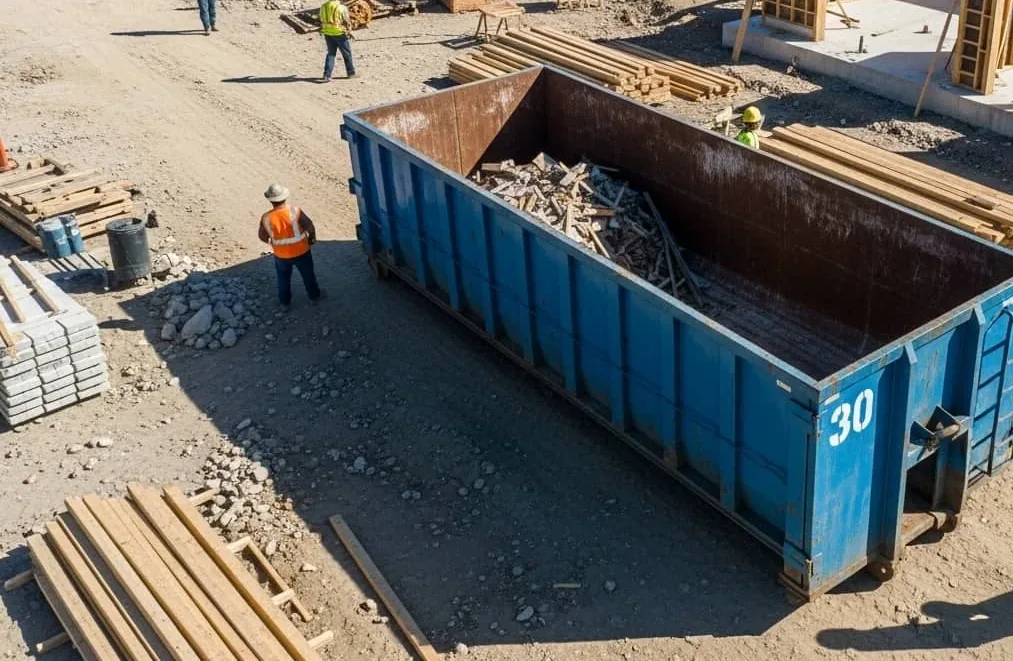
Demolition Debris Removal across all fifteen Cape Cod towns
Demolition debris is the hardest material to size a container for, because it is never one thing. A gut job produces plaster, lath, nails, wire, cabinet carcasses, tile, subfloor, insulation, and a surprising amount of sand. Half of it is light and bulky, the other half is dense enough to hit a weight limit while the box still looks half empty. Sizing that correctly takes experience with the specific housing stock, and on Cape Cod that stock is unusual.
We have been loading demo debris from Bourne to Provincetown since 2011. Antique Capes with plaster and lath that weighs two to three times what drywall does. Post-war summer cottages built light and now being gutted for year-round use. Garages, sheds, decks, and outbuildings that salt air and carpenter ants finished off years ago. Before any of that comes down, there are two questions that matter more than container size, and they concern asbestos in buildings from before about 1980 and lead paint in anything built before 1978. Both are covered on this page, because getting them wrong is expensive in a way a dumpster never is.
At a glance
What you get with demolition debris removal
- Sized for the real weight of plaster, lath, tile, and mixed demolition rubble
- Interior gut jobs, garages, sheds, decks, porches, and small outbuildings
- Swap-outs scheduled into the route so a demo crew never waits on a container
- Plywood cribbing standard on shell, pea stone, and sand-set Cape driveways
- Loads routed through a construction and demolition processing facility
- Clear guidance on what is banned from disposal in Massachusetts and why
- Straight talk about asbestos and lead before you start swinging
- Licensed and insured, locally owned in East Falmouth, working the Cape since 2011
Interior Gut Jobs: Plaster, Lath, and the Weight Problem
Take an antique Cape down to the studs and the debris will astonish you. Plaster and lath is the reason. A plaster wall is a coat of scratch, brown, and finish plaster over wood lath, and it weighs on the order of two to three times what an equivalent area of drywall does. A room that would produce a manageable pile of gypsum produces a genuinely heavy load of plaster rubble.
It also behaves badly in a container. Plaster shatters into dust and chunks that settle straight to the bottom and pack tight, while the lath stays springy and bridges above it. Crews consistently think the box has room left when in fact the tonnage is already gone.
The practical result is that plaster gut jobs get a smaller container than people expect. A 20 yard holding plaster from a full first floor can weigh more than a 30 yard holding light framing debris. We would rather send two 20s and swap them than send one 30 you cannot legally fill.
Everything else in a gut adds up too: subfloor, old tile and thinset, kitchen cabinets, sand-and-cement bases under bathroom tile in older houses, plumbing, and blown-in or batt insulation. Sort the metal out as you go, since Massachusetts bans ferrous and non-ferrous metal from disposal and pulling it saves you weight. Our cottage renovation debris guide works through a full interior job.
Garages, Sheds, Decks, and Small Structures
Detached structures come down fast and produce debris that is bulky rather than heavy, which flips the sizing logic from an interior gut.
Decks are the most common demolition job on the Cape, and salt air is why. Pressure-treated framing eventually gives up at the ledger and the post bases, and thirty years of freeze-thaw finishes the job. A typical 12 by 16 deck with rails and stairs fits comfortably in a 20 yard once the boards are cut down. Treated lumber cannot be burned and is banned from landfill disposal in Massachusetts, so it goes to a processor. Cut it to length. Long boards waste enormous volume by bridging corner to corner.
Sheds range from a light vinyl kit that fills half a 10 yard to a genuine timber-framed outbuilding with a shingled roof and a slab. If there is a concrete pad, that is a separate conversation because concrete is dense enough to fill a small container by itself. See concrete and heavy debris for that side.
Detached garages usually run a 30 yard or two 20s. Framing, roofing, siding, and a slab is a lot of material, and cedar sidewall shingles on an older Cape garage add volume out of proportion to their weight.
One caution on outbuildings: check what has been stored in them for decades before demolition day. Old paint, pesticide, gas cans, and asbestos pipe wrap turn up constantly, and none of it can ride in the container.
Asbestos in Pre-1980 Buildings: Stop Before You Swing
This is the section to read twice. Asbestos was used in construction materials in the United States through the 1970s and in some products later than that, so any Cape building put up before roughly 1980 should be treated as suspect until it has been surveyed.
Where it shows up in Cape housing stock: pipe and boiler insulation in basements, vinyl-asbestos floor tile and the black mastic under it, asbestos cement board siding and roofing shingles, joint compound and textured coatings, and duct wrap on old forced-air systems.
Massachusetts regulates this seriously. MassDEP and the Department of Labor Standards must both be notified before asbestos abatement, removal, or disposal, and the notification has to arrive at least ten working days before work begins. Abatement contractors have to be licensed by the Department of Labor Standards. Critically for you, asbestos waste may not be sent to a combustion facility or to a construction and demolition materials processor, which is exactly where our containers go. The full requirements are on the state's MassDEP asbestos and demolition notification guide.
So the rule is simple and absolute. Asbestos-containing material cannot go in our container, in any quantity, under any circumstances. Not a few floor tiles, not a length of pipe wrap, not a stack of cement siding. It has to be removed by a licensed abatement contractor and manifested to a facility that accepts it. Once that work is signed off, the rest of the demolition is ordinary debris and we handle it normally. Survey first, abate second, demo third.
Lead Paint in Pre-1978 Homes and What It Changes
Lead paint is the other pre-work question, and it catches a different set of buildings. Residential paint containing lead was banned in the United States in 1978, so anything built before 1978 is presumed to have it unless testing says otherwise. On Cape Cod that covers the antique inventory and essentially the entire mid-century cottage stock.
Massachusetts rules here are specific. Renovation, repair, and painting work performed for a fee in pre-1978 housing must be carried out by a licensed lead-safe renovation contractor when it disturbs more than 6 square feet of painted surface per room on the interior or more than 20 square feet on the exterior. Licensed contractors must employ trained, certified supervisors, and a supervisor has to be present on site while the work is happening. That threshold is small. Pulling trim off one room clears it easily. The state's lead-safe renovation guidance for homeowners lays out what to expect. Deleading, which applies to rental housing with young children, is a separate obligation again.
What this means for the container is different from asbestos. Painted demolition debris from a pre-1978 house generally goes in the container as ordinary construction and demolition material. The regulated part is how the work is performed, not where the debris ends up: containment, dust control, cleanup, and a certified supervisor on site. Loose paint chips, dust, and containment plastic are handled per the abatement plan, not swept into the box. When in doubt, ask your lead-safe contractor what belongs in our container and what does not.
Mixed Heavy Debris and the Massachusetts Waste Bans
Demolition produces the most mixed loads we handle, and Massachusetts has a longer banned-materials list than most states. Knowing it changes how you stage the job.
Banned from disposal statewide, and relevant to nearly every demo: asphalt pavement, brick, and concrete; ferrous and non-ferrous metals; clean gypsum wallboard; treated and untreated wood and wood waste; whole tires; white goods; and leaves and yard waste. Mattresses and textiles joined the list in November 2022.
Banned does not mean we cannot take it. It means the material has to be separated and sent to a processor rather than buried, which is why demolition loads go through a C and D processing facility. Practically, it means two things for you.
First, keep concrete, brick, and asphalt out of the mixed container. Those materials are dense enough to consume a whole container's tonnage on their own, and they need their own stream. A chimney, a slab, or a set of granite steps gets a dedicated box.
Second, pull metal as you go. Ductwork, copper, cast iron waste line, radiators, appliances, steel beams. It comes out of the load anyway and it is often worth money.
Clean gypsum from new construction is recyclable, but painted and plastered wallboard from a gut is not clean and is handled as mixed debris. The full state list lives on the MassDEP waste disposal bans page, and we cover the everyday version in what can and cannot go in a dumpster.
Site Setup, Swap-Outs, and Keeping a Demo Crew Moving
A demolition crew that has to stop and wait for a container loses more money in an afternoon than the rental costs for a week. Setting the site up properly prevents that.
Placement. Get the box as close to the exit path as the site allows, with the door end facing the work so heavy pieces can be walked in rather than lifted over the rail. On an interior gut that usually means the driveway nearest the bulkhead or the main door. Cape driveways are frequently shell, pea stone, or sand-set, and a demolition container is heavy, so we crib with plywood as a matter of course. The placement and driveway protection guide has the detail.
Septic. Say it again because it costs the most when it goes wrong: a loaded container must never sit over a septic tank, distribution box, or leach field. Most Cape properties outside the sewered areas run Title 5 systems with shallow components. Know where yours is before delivery day.
Swap-outs. On any demolition beyond a single room, plan them into the schedule rather than calling in a panic. Tell us the sequence, we will build the swaps into the route, and the crew never stands still. For a phased job that runs demo into rebuild, a construction container can carry through both stages.
Loading discipline. Break long material down, load flat and dense at the bottom, keep the load level with the top rail, and never load above it. An overloaded box cannot be legally hauled and the truck will leave without it.
Suitability
Is demolition debris removal the right call?
The fastest way to get this right is to check the load against both lists before you book.
Good fits for this container
- Interior gut jobs in antique Capes with plaster-and-lath walls and ceilings
- Kitchen and bathroom tear-outs including cabinets, tile, and subfloor
- Deck, porch, and stair demolition where treated lumber has rotted out
- Detached garages, barns, sheds, and other small outbuildings
- Cottage-to-year-round conversions being stripped back to framing
- Chimney and masonry removal, staged into a dedicated heavy-debris container
- Contractors running phased demolition across several rooms or several buildings
Send these somewhere else
- Asbestos-containing insulation, floor tile, mastic, siding, or cement shingles
- Lead abatement waste, containment plastic, and paint chip debris
- Concrete, brick, or asphalt pavement mixed into a general demolition load
- Fuel, solvents, paint, and other household hazardous waste found during demo
- Contaminated soil, underground fuel tanks, or anything requiring a licensed environmental hauler
- Loading above the top rail, which makes the container unsafe and illegal to transport
Sizing
Which container for demolition debris removal?
Every size below runs on this service. Match the material to the weight allowance and the volume takes care of itself.
- 10 yard — One bathroom, a small tile tear-out, or a plaster ceiling. The right box whenever the debris is dense, because a bigger container simply cannot be legally filled.
- 15 yard — A kitchen gut, a modest deck, or a single room stripped to studs in a plaster-walled antique. Fits the short Cape driveways that will not take a longer box.
- 20 yard — The workhorse for demolition. A full first-floor gut, a 12 by 16 deck with rails and stairs, or a substantial shed. Best all-around balance of volume and tonnage.
- 30 yard — A detached garage, a whole-cottage interior strip, or a multi-room gut where framing and roofing add bulk. Needs a long clear run for the truck to set it.
- 40 yard — Light bulky demolition only, such as framing, siding, and cedar shingle from a large structure. The wrong choice for plaster or masonry, which hit tonnage far too soon.
| Size | Dimensions | Capacity | Weight included | Best for |
|---|---|---|---|---|
| 10 Yard Dumpster | typically about 12 ft long × 8 ft wide × 3.5 ft high | about 3-4 pickup truck loads | 1-2 tons | Heavy, dense debris and tight driveways: concrete, brick, tile, one-room gut. |
| 15 Yard Dumpster | typically about 16 ft long × 8 ft wide × 4 ft high | about 4-6 pickup truck loads | 2 tons | Two-room remodels, garage and shed cleanouts, small roof tear-offs. |
| 20 Yard Dumpster | typically about 22 ft long × 8 ft wide × 4.5 ft high | about 6-8 pickup truck loads | 2-3 tons | Full roof replacement, whole-floor renovation, three or four bedroom cleanout. |
| 30 Yard Dumpster | typically about 22 ft long × 8 ft wide × 6 ft high | about 9-12 pickup truck loads | 3-4 tons | Cottage gut renovation, whole-house estate cleanout, storm debris, demolition. |
| 40 Yard Dumpster | typically about 22 ft long × 8 ft wide × 8 ft high | about 12-16 pickup truck loads | 4-5 tons | Structural demolition, commercial and multi-unit work, high-volume bulky debris. |
Demolition Debris Removal — the Cape Cod specifics
Cape building stock makes demolition sizing its own skill. An eighteenth or nineteenth century Cape on Route 6A has plaster over wood lath, wide-board floors, and often a brick center chimney, all of it heavy. A 1960s summer cottage in Dennis or Eastham is the opposite, built light with thin paneling and a slab-on-grade or crawlspace. The same square footage produces wildly different tonnage.
Two regulatory points apply everywhere on the Cape. Asbestos abatement requires notification to MassDEP and the Department of Labor Standards at least ten working days before work starts, and asbestos waste is expressly barred from construction and demolition processing facilities, which is where our loads go. See the state's asbestos and demolition notification guide. Separately, buildings put up before 1978 fall under Massachusetts lead-safe renovation rules once you disturb more than six square feet of painted surface indoors. Check the homeowner lead-safe renovation guidance before demolition day, not after.
Talk to a real person
Need demolition debris removal on Cape Cod?
Call (774) 208-0570, describe the job in a sentence, and you will get a flat price and a delivery window on the same call.
Mon–Sat 7:00am – 6:00pm · Sun by appointment
Answers
Demolition Debris Removal — your questions answered
Can asbestos go in a demolition dumpster?
No, under no circumstances and in no quantity. Massachusetts requires asbestos abatement work to be notified to MassDEP and the Department of Labor Standards at least ten working days in advance, performed by a licensed abatement contractor, and disposed of at a facility that accepts it. State rules specifically bar asbestos waste from construction and demolition processing facilities, which is where our containers go. Survey the building first, abate second, then call us for the ordinary demolition debris.
My house was built in 1955. Do I need to worry about lead paint?
Yes. Anything built before 1978 is presumed to contain lead paint unless testing proves otherwise. In Massachusetts, renovation done for a fee that disturbs more than six square feet of painted surface per room inside, or twenty square feet outside, has to be done by a licensed lead-safe renovation contractor with a certified supervisor on site. That threshold is easy to cross. The painted debris itself normally goes in the container; the regulated part is how the work is performed.
Why do you send a smaller dumpster for a plaster gut?
Because plaster and lath weighs roughly two to three times what drywall does for the same wall area, and it packs down tight instead of staying bulky. A 20 yard container full of plaster rubble can outweigh a 30 yard full of light framing debris. Weight, not volume, is what stops the load. Sending two smaller boxes and swapping them keeps you legal and usually costs less than paying an overage on one overloaded container.
Can I put concrete from a slab in with the rest of the demo debris?
It is a bad idea and we will steer you away from it. Concrete, brick, and asphalt pavement are banned from disposal in Massachusetts and go to their own recycling stream, and they are dense enough to eat an entire container's tonnage allowance by themselves. Chimneys, slabs, footings, and granite steps get a dedicated heavy-debris container, usually a 10 yard. Keeping the streams separate is cheaper than mixing them and paying for it at the scale.
How many containers will a garage demolition take?
A typical detached one or two-car garage runs one 30 yard or two 20 yard containers, depending on whether there is a slab and how it was built. Framing, roofing, and siding fill volume quickly, and cedar sidewall shingles on an older Cape garage add more bulk than their weight suggests. A concrete slab is a separate box. Tell us the footprint and construction when you call and we will plan the swaps into the schedule.
Service area
Demolition Debris Removal across Cape Cod
We run roll-off containers out of our 19 Tradesman Cir yard in East Falmouth to all fifteen Cape Cod towns and the villages inside them — from Woods Hole and the Bourne bridges through the Mid Cape and Route 6A, out past the Orleans rotary and up the Outer Cape to Provincetown. Outer Cape runs are scheduled rather than same-day, and in July and August everything books up early. If your village is not listed, call anyway. We almost certainly get there.
Related services
Popular service areas
From the guides
- What a Dumpster Rental Actually Costs on Cape Cod (And What Drives the Number)
- What Can and Can't Go in a Dumpster in Massachusetts: The Cape Cod Rules Explained
- Do You Need a Permit for a Dumpster on Cape Cod? A Town-by-Town Guide
- Sizing a Dumpster for a Roof Tear-Off on Cape Cod: Asphalt, Cedar Shingle and Shake
- All articles