
Cape Cod service
Construction Dumpster Rental on Cape Cod
Job-site roll-off containers for new builds, additions and gut renovations across Barnstable County, with swap-outs quick enough to keep framing and demo crews moving.
- Licensed & insured
- Same-day on the Upper Cape
- Flat-rate pricing
- All 15 Cape towns
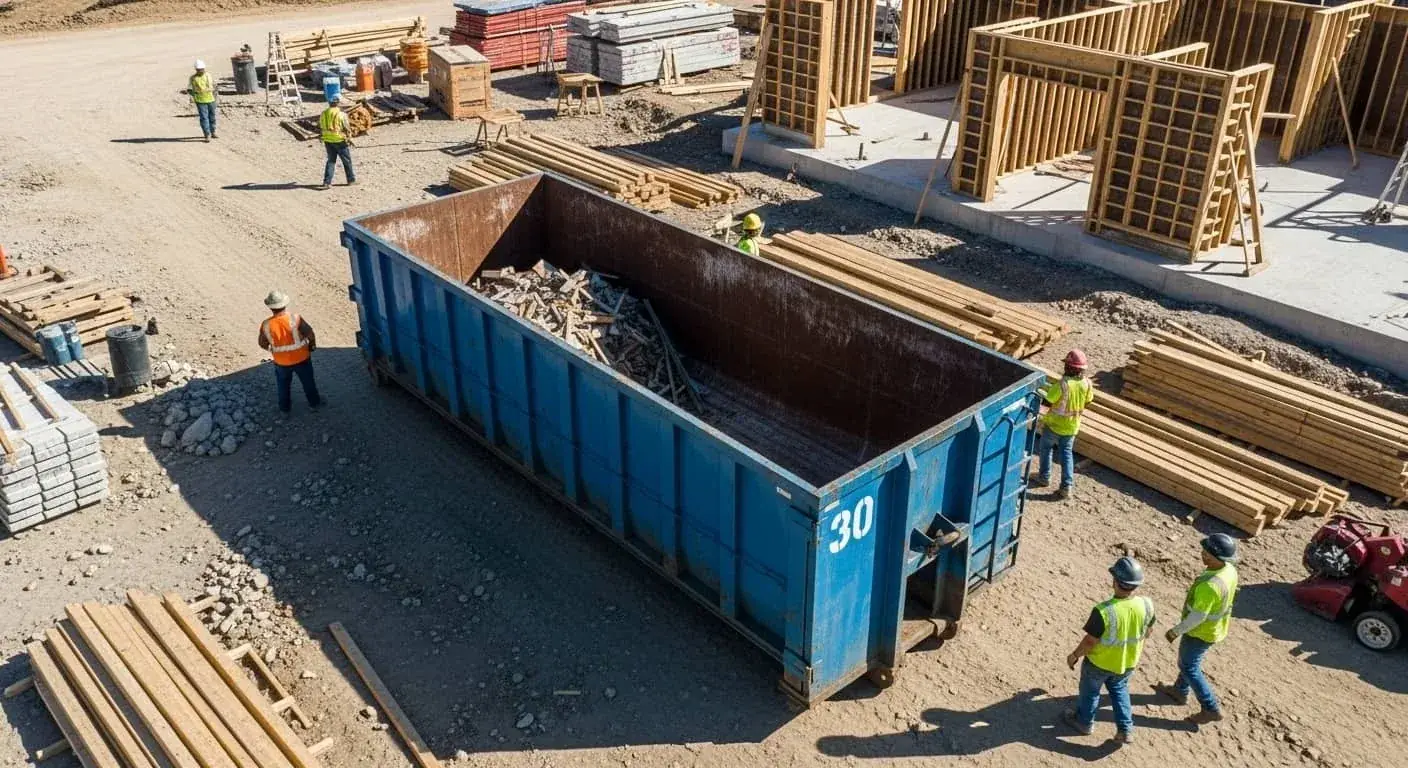
Construction Dumpster Rental across all fifteen Cape Cod towns
A framing crew loses money the moment there is nowhere to throw cutoffs. Construction container service is judged on one thing: how fast a full box becomes an empty one. Builders working the Cape deal with narrow lots, sand shoulders, septic fields under half the yard, and a bridge bottleneck that turns a late delivery into a lost morning.
Nate Souza started running containers for Barnstable County contractors in 2011 and the operation is still built around trade schedules rather than office hours. Mixed construction and demolition loads — framing scrap, sheathing, shingles, plaster, cabinetry, subfloor, siding — go in one box. Sizes run 10 to 40 yards, quoted flat with delivery, rental period, pickup and disposal included up to the stated tonnage. Same-day and next-day swaps are available year-round, and off-season they are routine. Call (774) 208-0570 with your site address and material and you will get a real number on the call.
At a glance
What you get with construction dumpster rental
- Mixed construction and demolition loads in a single container
- Same-day and next-day swap-outs to keep crews producing
- Flat-rate quotes you can drop straight into a bid
- Contractor-familiar drivers who stage boxes on tight Cape lots
- Cribbing on soft sand, shell and freshly graded pads
- Scale tickets available for job closeout documentation
- Sizes 10 through 40 yards, matched to phase and material density
- Serving Barnstable County builders since 2011, licensed and insured
Job-Site Pricing and What the Flat Rate Covers
Contractors need a number they can put in a bid, not a range that moves. Every container is quoted flat and that price includes the drop, the rental window, the haul, and disposal up to the tonnage assigned to that size. Overage past the included tonnage is billed per ton at the disposal facility's posted scale rate, with the ticket available for your job file.
Three variables drive the quote: size, material density, and drive time to the site. A 20 yard of framing scrap and a 20 yard of plaster and brick are not the same disposal cost, and pricing that pretends otherwise just moves the surprise to the invoice. Sites past the elbow — Wellfleet, Truro, Provincetown — carry longer hauls than an Upper Cape lot, and the quote says so plainly.
For multi-phase jobs, it is usually cheaper to run a right-sized box on a swap cycle than to over-order once and pay to haul air. Talk through the phases when you call: demo, framing, rough, finish. Each phase produces a different mix. Our Cape Cod cost breakdown explains the variables in detail, and the size lineup gives footprints and wall heights so you can plan staging before the excavator shows up.
Mixed C&D: Framing Scrap, Sheathing, Plaster and Shingles
A general construction container takes mixed C&D, which is most of what a job produces. Dimensional lumber and engineered cutoffs, plywood and OSB sheathing, subfloor, trim and millwork, doors and windows, cabinetry and countertop, insulation, roofing shingles and underlayment, cedar shingle siding, decking, and plaster with the lath still attached all ride together.
The material that needs a decision is the dense stuff. Concrete, brick, block, stone, asphalt and ceramic tile are on the Massachusetts disposal ban list as recoverable materials and are far heavier per cubic yard than anything else on site. Loading a footing tear-out into a mixed box is the fastest way to blow a tonnage allowance and stall a truck at the scale. Run those separately in a concrete and heavy debris container, which is sized for weight instead of volume.
Materials that stop the job
Suspect asbestos — transite siding, old pipe and boiler insulation, 9-inch floor tile and its black mastic, some window glazing — is not a judgment call on site. It requires testing and a licensed abatement contractor before demolition proceeds. Same for lead paint disturbance. Roofing tear-offs load fastest in a dedicated roofing container, and full structure removal belongs in demolition debris service.
Load Weight on a Gut-and-Rebuild
Weight is the number that surprises builders on Cape renovations, and the culprit is almost always what was already in the house.
Antique and mid-century Cape homes are full of plaster over wood lath. Per square foot of wall, that assembly runs roughly two to three times the weight of modern drywall, because you are hauling sand, lime and a horsehair binder rather than paper-faced gypsum. A single 1,200 square foot gut of a 1920s Cape can produce more tonnage in plaster alone than the whole framing package. Add old-growth timber framing, board sheathing, three layers of asphalt shingles over cedar, cast iron waste stack, and a brick chimney and the load gets serious.
Two habits keep it manageable. First, load flat and dense material along the floor of the box and stack bulky material above it — a container packed by a laborer with a wheelbarrow gets far more into the same volume than one filled by tossing from a distance. Second, tarp between shifts. Salt-air fog and a two-day nor'easter add real water weight to insulation, drywall, cardboard and carpet. When a phase is genuinely heavy, order a smaller box on a faster swap cycle rather than a big one you cannot fill without going over. Our size guide works through those tradeoffs by project type.
Staging a Container on a Tight Cape Lot
Cape lots rarely give you room to spare. Between the setback, the septic, the well, and the neighbor's hedge, there may be exactly one workable spot for a container, and it is worth identifying it before the first truck arrives.
The truck needs about sixty feet of straight approach, ten to twelve feet of width, and clear overhead room for the box to tilt well above roof height. On a new build with no driveway yet, that means a compacted gravel pad or a stable sand shoulder — soft, freshly graded sand will bury a rear axle and cost you a morning. Cribbing under the rails is standard practice on soft ground.
Septic is the site hazard nobody bills for. Most Cape properties run Title 5 systems, and the leach field, distribution box and tank often sit under the flattest, most tempting part of the yard. A loaded roll-off over a leach trench crushes it. Get the as-built from the Board of Health, or from the site plan, and mark it before delivery. Mark the well and any utility trenches too, and call Dig Safe before any excavation. On a job where the box has to sit in the road, check the town-by-town permit rules first, and review placement and surface protection when you are working over a finished drive.
Building Season, Bridge Traffic, and Historic Review
Construction scheduling on this peninsula is shaped by three constraints that do not exist inland.
The first is season. Building permits and remodel work concentrate between Labor Day and Memorial Day for anything touching a seasonal home or a rental property, because owners will not give up July. That makes September through April the real building season on the Cape, and it is also when container availability is best and same-day swaps are easy.
The second is access. The Bourne and Sagamore bridges are the only road links across the canal, and summer backups on Route 6, Route 28 and Route 151 compress how many stops a truck can make in a day. Booking a swap for first thing in the morning beats trying to squeeze one in at two on a Friday in August.
The third is review. Properties in the Old King's Highway historic district along Route 6A face design review that can shift a demolition date, and the Cape Cod Commission reviews larger projects regionally. Neither controls your dumpster, but both control your calendar — so confirm the demo date before you book a week of container service. Builders working Barnstable, Brewster and the Mid-Cape run into 6A review most often.
Delivery, Swap-Outs, and the Final Haul
Site logistics work best when they are boring and repeatable.
- Call (774) 208-0570 with the site address, phase, material and access notes. You get a flat quote on the call and a delivery window, not a callback.
- Prep the pad. Compacted, clear, and marked — septic flagged, wires noted, approach open. On a raw lot, gravel beats sand every time.
- Load and swap. Call when the box is full or nearly full and we bring an empty on the same or next business day. Loads must sit level with the top rail so the tarp closes; overloaded boxes cannot legally be hauled.
- Final haul and documentation. One call ends the rental. Scale tickets are available for your closeout file if the owner or GC requires them.
A few things reliably prevent lost days: name a site contact who actually answers the phone, keep the approach clear of trades' trucks on swap mornings, and give a day's notice on a Friday swap in summer. For storm-damaged sites and post-nor'easter work, storm debris removal handles the mix of limbs and building material, and coverage across the full county is on the service area page.
Suitability
Is construction dumpster rental the right call?
The fastest way to get this right is to check the load against both lists before you book.
Good fits for this container
- New home construction framing and finish waste
- Additions, dormers and second-story pop-ups
- Whole-house gut renovations of antique Capes
- Kitchen and bath remodels with tile and cabinetry
- Garage, barn and outbuilding demolition
- Siding replacement and window and door swap-outs
- Deck rebuilds and exterior trim replacement
Send these somewhere else
- Asbestos-containing materials such as transite siding, pipe insulation and 9-inch floor tile, which require a licensed abatement contractor and MassDEP notification
- Paint, thinners, adhesives, sealants and solvents left over from finish work
- Propane cylinders, fuel cans and torch bottles from the site trailer
- Equipment tires and heavy machinery tires, which Massachusetts bans from landfill disposal
- Appliances containing refrigerant, including old refrigerators and HVAC condensers, until a certified technician recovers the charge
- Contaminated soil, fuel-soaked absorbent and drums of unknown liquid
Sizing
Which container for construction dumpster rental?
Every size below runs on this service. Match the material to the weight allowance and the volume takes care of itself.
- 10 yard — Dense, low-volume phases — a footing or slab breakout, a tile tear-out, or a chimney takedown. Short walls mean a wheelbarrow can be run up a plank instead of lifted.
- 15 yard — A single-room gut in a plaster-and-lath house, a bath remodel down to the studs, or the demo phase of a small addition where weight arrives before volume does.
- 20 yard — The default job-site box. Handles a kitchen gut, a framing package's cutoffs, or a dormer addition, and still fits on a narrow lot beside the work.
- 30 yard — Whole-house renovations, large additions, and finish phases where insulation, cardboard and packaging inflate volume without adding weight.
- 40 yard — New construction with a long build cycle, or a full structure demo where bulk dominates. Needs open staging room and a truck approach most tight Cape lots cannot offer.
| Size | Dimensions | Capacity | Weight included | Best for |
|---|---|---|---|---|
| 10 Yard Dumpster | typically about 12 ft long × 8 ft wide × 3.5 ft high | about 3-4 pickup truck loads | 1-2 tons | Heavy, dense debris and tight driveways: concrete, brick, tile, one-room gut. |
| 15 Yard Dumpster | typically about 16 ft long × 8 ft wide × 4 ft high | about 4-6 pickup truck loads | 2 tons | Two-room remodels, garage and shed cleanouts, small roof tear-offs. |
| 20 Yard Dumpster | typically about 22 ft long × 8 ft wide × 4.5 ft high | about 6-8 pickup truck loads | 2-3 tons | Full roof replacement, whole-floor renovation, three or four bedroom cleanout. |
| 30 Yard Dumpster | typically about 22 ft long × 8 ft wide × 6 ft high | about 9-12 pickup truck loads | 3-4 tons | Cottage gut renovation, whole-house estate cleanout, storm debris, demolition. |
| 40 Yard Dumpster | typically about 22 ft long × 8 ft wide × 8 ft high | about 12-16 pickup truck loads | 4-5 tons | Structural demolition, commercial and multi-unit work, high-volume bulky debris. |
Construction Dumpster Rental — the Cape Cod specifics
Two regulatory realities shape Cape demolition work more than any local ordinance. The first is asbestos. Housing stock built before the early 1980s frequently contains transite siding, pipe and boiler wrap, and resilient flooring with asbestos-bearing mastic. Massachusetts requires notification and licensed abatement before that material is disturbed, laid out in the state's asbestos and construction and demolition notification guidance. Finding it mid-demo stops the job, so test early.
The second is diversion. Massachusetts bans asphalt pavement, brick, concrete, metal, clean gypsum wallboard and treated and untreated wood from ordinary disposal, so recoverable material has to be separated rather than buried. The EPA's overview of sustainable management of construction and demolition materials covers the reasoning, and separating on site is nearly always cheaper than paying a facility to sort your load.
Add sandy subsoil, Title 5 septic under most yards, and lots where the setback leaves eight feet of staging room, and job-site container planning on the Cape is a design decision, not an afterthought.
Talk to a real person
Need construction dumpster rental on Cape Cod?
Call (774) 208-0570, describe the job in a sentence, and you will get a flat price and a delivery window on the same call.
Mon–Sat 7:00am – 6:00pm · Sun by appointment
Answers
Construction Dumpster Rental — your questions answered
Can I put concrete, brick and framing debris in the same construction dumpster?
You can, but it usually costs more than running them separately. Concrete, brick and block weigh several times what wood and drywall do per cubic yard, so mixing them means hitting the tonnage limit with the box half empty. Massachusetts also bans asphalt, brick and concrete from ordinary disposal as recoverable material, so clean loads route to reclaim facilities at a better rate. Order a small dedicated heavy-debris box for the masonry and keep the mixed C&D box light.
How fast can you swap a full container on an active job site?
Same-day is common outside July and August, and next-day is the reliable expectation on the Upper and Mid Cape outside the summer season. Summer traffic across the canal bridges and along Route 6 is the limiting factor, not truck availability, so a morning call gets served faster than an afternoon one. Give a day's notice for Friday swaps in season. If your crew works to a hard schedule, tell us the phase dates up front and we will pre-plan the swap cycle instead of reacting.
What do I do if we find asbestos siding partway through a tear-off?
Stop that portion of the work and do not load it. Transite siding, old pipe wrap and 9-inch floor tile with black mastic are common in Cape houses built before the early 1980s. Massachusetts requires testing, notification and removal by a licensed abatement contractor before demolition continues. The container can stay on site for the rest of the debris — it just cannot receive that material. Loading it risks a rejected load and real liability.
Can the truck get onto a raw lot with no driveway yet?
Usually, if the approach is stable. Compacted gravel or firm existing grade works fine. Freshly graded loose sand does not — a loaded roll-off truck runs heavy on the rear axle and will dig in, which costs you a delivery window and possibly a tow. If the pad is not ready, lay a gravel apron from the road first. Send a photo of the access when you call and the dispatcher will tell you honestly whether it will work.
Do I need a permit for a dumpster on a construction site?
Often yes, and not only for street placement. Falmouth requires a fire-prevention permit for any container over 6 cubic yards, including on private property, with a ten-foot setback from structures. Elsewhere the trigger is usually occupying a public street or town layout, common on tight village lots in Provincetown, Chatham and older parts of Hyannis, and each town issues those through DPW, police or fire. Historic district properties along Route 6A may carry conditions. Give us the site address when you book.
Service area
Construction Dumpster Rental across Cape Cod
We run roll-off containers out of our 19 Tradesman Cir yard in East Falmouth to all fifteen Cape Cod towns and the villages inside them — from Woods Hole and the Bourne bridges through the Mid Cape and Route 6A, out past the Orleans rotary and up the Outer Cape to Provincetown. Outer Cape runs are scheduled rather than same-day, and in July and August everything books up early. If your village is not listed, call anyway. We almost certainly get there.
Related services
Popular service areas
From the guides
- What a Dumpster Rental Actually Costs on Cape Cod (And What Drives the Number)
- What Can and Can't Go in a Dumpster in Massachusetts: The Cape Cod Rules Explained
- Do You Need a Permit for a Dumpster on Cape Cod? A Town-by-Town Guide
- Sizing a Dumpster for a Roof Tear-Off on Cape Cod: Asphalt, Cedar Shingle and Shake
- All articles