
Cape Cod service
Yard Waste Removal on Cape Cod
Brush, limbs, leaves and hedge trimmings hauled from any Barnstable County property. Clean loads go to composting, not a landfill, and we deliver fast.
- Licensed & insured
- Same-day on the Upper Cape
- Flat-rate pricing
- All 15 Cape towns
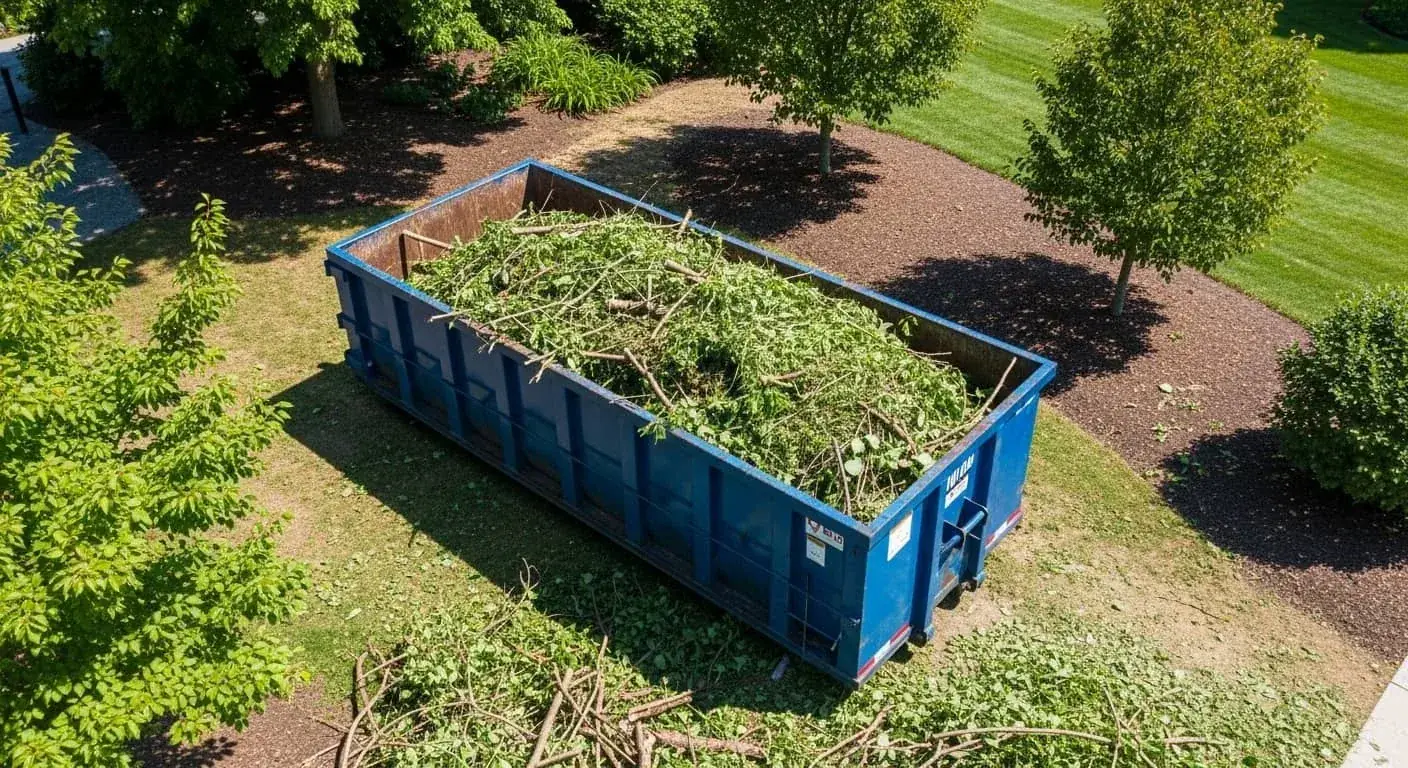
Yard Waste Removal across all fifteen Cape Cod towns
Cape yards produce a strange mix of debris. Pitch pine sheds limbs after every hard blow, scrub oak grows back faster than you can cut it, and bittersweet climbs anything that stands still long enough. Add hedge and privet trimmings, beach grass thatch, and the leaf load that comes off an established property in November, and a stack of contractor bags stops being a plan. A roll-off parked in the driveway for a few days lets you cut, drag and load on your own schedule instead of making eleven trips to the transfer station with a tarp over the truck bed.
Nate Souza has been running containers across Barnstable County since 2011, and brush is one of the loads that rewards doing it right. Massachusetts keeps leaves and yard waste out of landfill disposal, which means clean organic material heads to composting and processing rather than a burial cell. Keeping the load clean is not a formality. Soil, stumps with root balls full of sand, fence pickets and plastic pots mixed into brush turn a compostable load into trash. Sort it at the pile and the whole job gets simpler and usually cheaper.
At a glance
What you get with yard waste removal
- Leaves and yard waste are banned from disposal in Massachusetts, so clean brush loads are composted or ground rather than buried
- Brush, limbs, hedge and privet trimmings, vines, leaves, grass and garden debris all load together in one container
- No soil, sod, stumps with root balls, treated lumber, plastic pots or landscape fabric in a clean yard waste load
- Cut limbs and vines to four or five feet so the box fills by volume instead of bridging across the top
- Pitch pine and scrub oak take enormous volume for very little weight, so size up for brush
- Wet leaves and pine needles are heavy; mention a big leaf load when you call so we size for tonnage
- Plywood cribbing under the rails protects pea-stone, crushed-shell and sandy driveways
- Never place a loaded container over a Title 5 septic tank, distribution box or leach field
What Counts as Yard Waste, and What Doesn't
Yard waste in the practical sense is the green and woody material that grew on your property: leaves, grass clippings, garden trimmings, hedge and privet cuttings, vines, brush, and limbs cut to manageable lengths. Most of what comes off a Cape lot after a weekend of clearing falls squarely in that bucket.
The gray areas cause the trouble. Stumps are the big one. A stump pulled with an excavator carries a root ball packed with sand and stone, and that soil contamination is exactly what a composting operation cannot take. Same story with sod, which is close to half dirt by weight. Pressure-treated lumber, painted fence sections, plastic nursery pots, garden hose, wire fencing and landscape fabric all look like yard debris sitting in a pile, but none of it composts.
Large-diameter trunk wood is a separate conversation. Short logs load fine. A full trunk section four feet across does not, and it usually needs a different outlet. If you are unsure, call before you load anything. Sorting a mixed pile before it goes in the box costs you an hour; sorting it after the container is full costs a great deal more. When a load truly is mixed and sorting is not realistic, we can run it as general debris through our junk removal service instead. Just say so up front and we will price it that way.
Why Massachusetts Keeps Leaves and Brush Out of the Landfill
MassDEP maintains a list of materials banned from disposal in Massachusetts, and leaves and yard waste have been on it for decades. The ban applies to landfills, combustion facilities and the transfer stations that feed them. In plain terms, a hauler cannot bury a load of brush, and the facilities that accept it are required to inspect for banned material.
What that means for you is straightforward. Your brush becomes compost, mulch or ground wood fuel, and clean organic material generally costs less per ton to process than mixed household trash. It only works if the load stays clean. Composting operations reject and surcharge contaminated loads, because one roll of landscape fabric or a bag of kitchen garbage can foul a whole windrow.
So the rules on a brush container are short. Green and woody material only. No soil, sod or stumps with dirt clinging to them. No pots, no plastic bags, no hose, no metal, no treated wood. If you bag leaves to move them, empty the bags into the container and keep the bags out unless they are certified compostable paper. The same MassDEP ban list also covers metal, clean gypsum wallboard, whole tires, mattresses and textiles, which matters if a bigger cleanout is coming behind the yard work. Our guide to what can and cannot go in a dumpster covers the rest of it.
Pitch Pine, Scrub Oak and the Brush That Grows Back
Two species define most Cape brush work. Pitch pine sheds limbs constantly, drops needles that mat into thatch, and snaps in wind rather than bending. Scrub oak grows in dense thickets with springy stems that fight a chainsaw and take up enormous volume relative to their weight. Cutting either one back along a driveway or a property line produces a pile that looks manageable on the ground and then swallows a 20 yard box once you start loading.
Volume is the thing people underestimate. Brush is mostly air. A pile ten feet across and chest high will not compact on its own, and a container loaded with uncut branches can be half empty by weight while looking completely full. Cutting limbs down to four or five feet, stacking rather than tossing, and laying the heaviest stems flat on the bottom can nearly double what a single container holds.
Pine needles and oak leaf litter are the opposite problem. They pack dense and get heavy fast when wet, and a fall cleanup on an established property can put more weight in a 15 yard container than the owner expects. If you are combining a big leaf load with brush, mention it when you call so we size for tonnage as well as volume. The 20 yard container is the usual answer for a serious day of brush.
Bittersweet, Privet and Invasive Vines: Cutting It Right
Oriental bittersweet is the vine strangling half the tree lines on the Cape. It climbs pitch pine and oak, girdles trunks, and pulls limbs down in wind. Cutting it out is satisfying work and it produces an awkward load: long ropey runs that tangle, catch on the container walls and refuse to settle.
Cut vines into shorter lengths as you pull them. Four to six feet is plenty. Long runs left whole will bridge across the top of a container, leaving void space underneath and making the load hard to tip out cleanly at the facility. Coiled vine also traps loose debris and lifts the whole mass when the box is dumped, which is how a container comes back only half emptied.
Bittersweet spreads from root fragments and berries, so there is a real argument for keeping it out of your own backyard compost pile. Sending it out with the brush load to a permitted composting operation, where material is ground and heated in managed windrows, is the better route. The same goes for the other aggressive climbers people pull off fences and outbuildings.
Privet, honeysuckle and overgrown hedge material load easily by comparison. It is bulky and light, it compresses under its own weight if you tread it down as you go, and it fills a container faster than it adds tonnage. Hedge work usually pairs well with a general spring cleanup rather than needing a container of its own.
Loading a Brush Container So It Actually Empties
A roll-off empties by tipping. Everything about how you load should serve that one fact.
Start with the heaviest, longest stems flat on the floor of the container, running front to back rather than side to side. Long pieces laid across the width will wedge against the walls and hold the rest of the load in place. Build up in layers, walking on the pile to compress it as you go, and keep tangled vine and small brushy material toward the middle where it will settle instead of hanging up on the side walls.
Keep everything below the top rail. A load riding above the rim cannot be tarped, and a container that cannot be tarped does not leave the property. Brush is the material most often loaded over the line, because it springs back up the moment you stop standing on it. Cut it shorter than you think you need to and the problem disappears.
Placement matters as much as loading. Brush jobs happen at the edges of a property, so the temptation is to put the container as close to the work as possible. Sandy soil, pea-stone and crushed-shell driveways and soft shoulders all shift under a loaded box. Title 5 septic tanks, distribution boxes and leach fields must never carry a container's weight, and on the Cape they are often exactly where you would want to park. We set plywood cribbing under the rails and pick the spot together at delivery. Our driveway placement guide has the detail.
Scheduling Around the Cape's Growing Season
Yard work here follows a predictable rhythm, and containers get tight at the same points every year. Spring cleanup starts as soon as the ground firms up, usually late March into April, and runs hard through May while owners get properties ready before Memorial Day. That window is the busiest of the year for brush. Book a few days out if your schedule allows it.
Summer is quieter for yard waste and busier for everything else. Renovation and turnover work dominates June through August, so a mid-summer brush container is usually easy to get on short notice. If a tree crew is coming, coordinate delivery for the morning they start rather than the day before, so the box is not sitting full on the driveway through a week you are paying for.
Fall combines the leaf load and the storm season. October and November bring the heaviest yard waste volume of the year, and any nor'easter in that stretch stacks limb work on top of it. When a storm has just come through, storm debris removal is a different scheduling picture and worth reading about separately.
Winter is the bargain nobody uses. Ground is firm, properties are empty, and dormant-season pruning on hedges and overgrown lots is easier to see and far easier to cut. Same-day and next-day delivery are usually available from December through March. Call (774) 208-0570 and we will tell you honestly what the calendar looks like this week.
Suitability
Is yard waste removal the right call?
The fastest way to get this right is to check the load against both lists before you book.
Good fits for this container
- Spring and fall property cleanups on established Cape lots
- Clearing scrub oak and pitch pine back from driveways and property lines
- Pulling oriental bittersweet and other invasive vines off trees, fences and outbuildings
- Hedge, privet and overgrown shrub removal
- Leaf and pine needle cleanup at rental properties between seasons
- Tree crew support when limbs and brush need a container on site
- Garden bed renovation, perennial clearing and beach grass thatch removal
Send these somewhere else
- Stumps and root balls with soil, sand and stone still attached
- Sod, loam, fill or any load that is mostly dirt
- Pressure-treated lumber, painted fence sections and stockade panels
- Plastic nursery pots and trays, garden hose, wire fencing and landscape fabric
- Household trash or construction debris bagged in with the brush
- Large-diameter trunk sections and full log rounds
Sizing
Which container for yard waste removal?
Every size below runs on this service. Match the material to the weight allowance and the volume takes care of itself.
- 10 yard — One afternoon of hedge trimming, a single bed cleared, or a modest leaf pile off a small cottage lot.
- 15 yard — A typical spring cleanup on a quarter-acre property: leaves, garden debris and a few days of pruning.
- 20 yard — The workhorse for brush. Scrub oak clearing, a serious pitch pine limb load, or a full fall leaf cleanup.
- 30 yard — Large lot clearing, brush from a tree crew working several trees, or an overgrown property taken back at once.
- 40 yard — Bulk brush only, where volume is huge and weight is low: land clearing, long hedgerow removal, big storm limb piles.
| Size | Dimensions | Capacity | Weight included | Best for |
|---|---|---|---|---|
| 10 Yard Dumpster | typically about 12 ft long × 8 ft wide × 3.5 ft high | about 3-4 pickup truck loads | 1-2 tons | Heavy, dense debris and tight driveways: concrete, brick, tile, one-room gut. |
| 15 Yard Dumpster | typically about 16 ft long × 8 ft wide × 4 ft high | about 4-6 pickup truck loads | 2 tons | Two-room remodels, garage and shed cleanouts, small roof tear-offs. |
| 20 Yard Dumpster | typically about 22 ft long × 8 ft wide × 4.5 ft high | about 6-8 pickup truck loads | 2-3 tons | Full roof replacement, whole-floor renovation, three or four bedroom cleanout. |
| 30 Yard Dumpster | typically about 22 ft long × 8 ft wide × 6 ft high | about 9-12 pickup truck loads | 3-4 tons | Cottage gut renovation, whole-house estate cleanout, storm debris, demolition. |
| 40 Yard Dumpster | typically about 22 ft long × 8 ft wide × 8 ft high | about 12-16 pickup truck loads | 4-5 tons | Structural demolition, commercial and multi-unit work, high-volume bulky debris. |
Yard Waste Removal — the Cape Cod specifics
Every town on the Cape handles yard waste a little differently. Most transfer stations and disposal areas accept brush from residents holding a current sticker, with limits on load size and hours that tighten in the busy season. That works fine for a car trunk of clippings. It stops working when you are taking back a quarter acre of scrub oak, and it never works at all for a seasonal owner who does not hold a sticker in the first place.
Sandy soil is the local wrinkle nobody warns you about. Roots pull up with a load of sand attached, and that sand is what turns a clean compostable load into a contaminated one. Shake root balls out at the pile before anything goes in the box.
MassDEP publishes the current waste disposal ban list and separate guidance on composting and organics if you want the source documents. We run brush containers in all fifteen Barnstable County towns, from Bourne to the Outer Cape, and our Cape Cod brush disposal guide goes deeper on town options.
Talk to a real person
Need yard waste removal on Cape Cod?
Call (774) 208-0570, describe the job in a sentence, and you will get a flat price and a delivery window on the same call.
Mon–Sat 7:00am – 6:00pm · Sun by appointment
Answers
Yard Waste Removal — your questions answered
Can I mix brush with regular household trash in one container?
You can, but it changes the load. Once household trash goes in with brush, the whole container becomes mixed debris and gets disposed of as trash rather than composted, which usually costs more per ton. If you have both, the cleanest approach is a dedicated brush container for the yard and a separate run for the house, or one mixed container booked as general debris from the start. Tell us which you want when you call and we will price it correctly.
Why can't I put stumps in a yard waste dumpster?
Stumps are wood, but the root ball comes out of the ground carrying sand, stone and soil, and composting or wood processing operations cannot accept that contamination. On the Cape the sand load is worse than most places because of how loose the soil is. Large stumps also do not grind well and are difficult to tip out of a container. Small stumps knocked clean of dirt are sometimes workable. Call and describe what you have before you load them.
How many bags of leaves fit in a 15 yard container?
Roughly 90 to 120 thirty-gallon bags' worth, provided you empty the bags into the box rather than loading them full. Bagged leaves waste close to a third of the space to air and bag walls, and emptying them keeps plastic out of a compostable load. Wet leaves weigh considerably more than dry ones, so a soaked November load will reach its tonnage allowance sooner than the same volume would in early October.
Do I need a permit to put a brush dumpster in my driveway?
On your own private driveway, no. Every Cape town allows a container on private property without a permit. Permits come into play when the box has to sit on a public street or in the town right-of-way, which happens often in the dense village centers and on narrow lanes with no room to turn. That is a town-by-town process and lead times vary. Our <a href="/blog/dumpster-permits-cape-cod-town-by-town.html">permit guide</a> walks through each one.
Can you handle brush at a property I only visit in summer?
That is a large part of the work. Seasonal owners rarely hold transfer station stickers and often cannot be on site the day a container comes or goes. We deliver, place with cribbing exactly where you tell us, and pick up on a scheduled day without needing anyone present. Photos of the placement before and after are available on request. Call (774) 208-0570 and we will build the dates around your trip.
Service area
Yard Waste Removal across Cape Cod
We run roll-off containers out of our 19 Tradesman Cir yard in East Falmouth to all fifteen Cape Cod towns and the villages inside them — from Woods Hole and the Bourne bridges through the Mid Cape and Route 6A, out past the Orleans rotary and up the Outer Cape to Provincetown. Outer Cape runs are scheduled rather than same-day, and in July and August everything books up early. If your village is not listed, call anyway. We almost certainly get there.
Related services
Popular service areas
From the guides
- What a Dumpster Rental Actually Costs on Cape Cod (And What Drives the Number)
- What Can and Can't Go in a Dumpster in Massachusetts: The Cape Cod Rules Explained
- Do You Need a Permit for a Dumpster on Cape Cod? A Town-by-Town Guide
- Sizing a Dumpster for a Roof Tear-Off on Cape Cod: Asphalt, Cedar Shingle and Shake
- All articles