A roof tear-off is the job where guessing the container costs you real money. The debris looks compact going in, the box never fills, and then a scale ticket turns up a week later with an overage line on it. Roofing is the most reliably weight-limited load we haul on Cape Cod, and the arithmetic that decides your container has almost nothing to do with cubic yards.
Below is the method our roofers use: measure the roof in squares from the ground, correct for pitch, count layers, multiply by a weight per square, then pick a box. Cedar shingle and shake roofs, still everywhere from Woods Hole to Truro, get their own math, because the published numbers for cedar are all over the place and the skip sheathing underneath changes the answer.
Measure the roof in squares without getting on it
A roofing square is 100 square feet of roof surface. Every price, every weight figure and every capacity table in the trade runs on squares, so that is the unit to get right first.
Start on the ground. Break the building outline into rectangles and measure each one along the foundation, then add the eave and rake overhangs — on most Cape houses that is 8 to 18 inches per side. Add the footprint of dormers, ells and porch roofs separately. That total is your footprint area, not your roof area, because a sloped plane is always larger than the ground it covers.
Worked example: a 28 ft by 40 ft main body with a foot of overhang all round comes to roughly 1,240 square feet of footprint. At an 8/12 pitch that is about 1,490 square feet of actual roof, call it 15 squares, before you add a shed dormer or a garage.
To find the pitch without climbing, hold a 12-inch level against a rafter in the attic, level it, and measure down from the free end to the underside of the sheathing. That drop in inches is the rise per 12 inches of run. From outside, sighting the gable triangle and measuring peak height above the plate against half the span gets you close enough.
Pitch multipliers: the number most estimates miss
Multiply footprint area by the factor for your pitch, then divide by 100 for squares. On a steep Cape gable this is not a rounding error — a 12/12 roof is 41 percent bigger than the ground under it.
Add 5 to 10 percent for hips, valleys and dormer cheeks, which are awkward to measure and always come out larger than they look.
Count the layers before you order anything
Layer count doubles or triples your tonnage while adding almost no volume, so it is the single most expensive thing to get wrong. Look at the rake edge or the drip edge and read the roof in cross-section: one layer of asphalt over felt over deck is a thin sandwich, two layers is visibly chunky, and a course of cedar hiding under asphalt shows up as a stepped, uneven edge with butts you can see from the ladder.
Older Cape and Islands housing stock hides a common worst case — asphalt laid over original cedar, over skip sheathing, over the original rafters. That roof produces three separate debris streams and roughly double the weight a homeowner expects. Lift a shingle at a gable corner, or pull the ridge vent trim, and count.
What a square actually weighs
Published tear-off weights vary more than most sources admit, especially for cedar. Manufacturer bundle weights, engineering dead-load tables and disposal-industry rules of thumb disagree by a factor of two on wood roofing, and the honest answer is that cedar weight depends on shingle versus shake, length, grade and how much water the roof is holding on the day you strip it. Use the ranges, not a single figure.
Rain matters. Cedar and old felt hold water, and a tear-off done the morning after a soaking can run noticeably heavier than the same roof stripped dry.
Container size by material, squares and layers
Now do the multiplication rather than eyeballing the pile. Squares times pounds per square, divided by 2,000, gives tons. Compare that against the weight allowance included in the rental, not against the cubic yards.
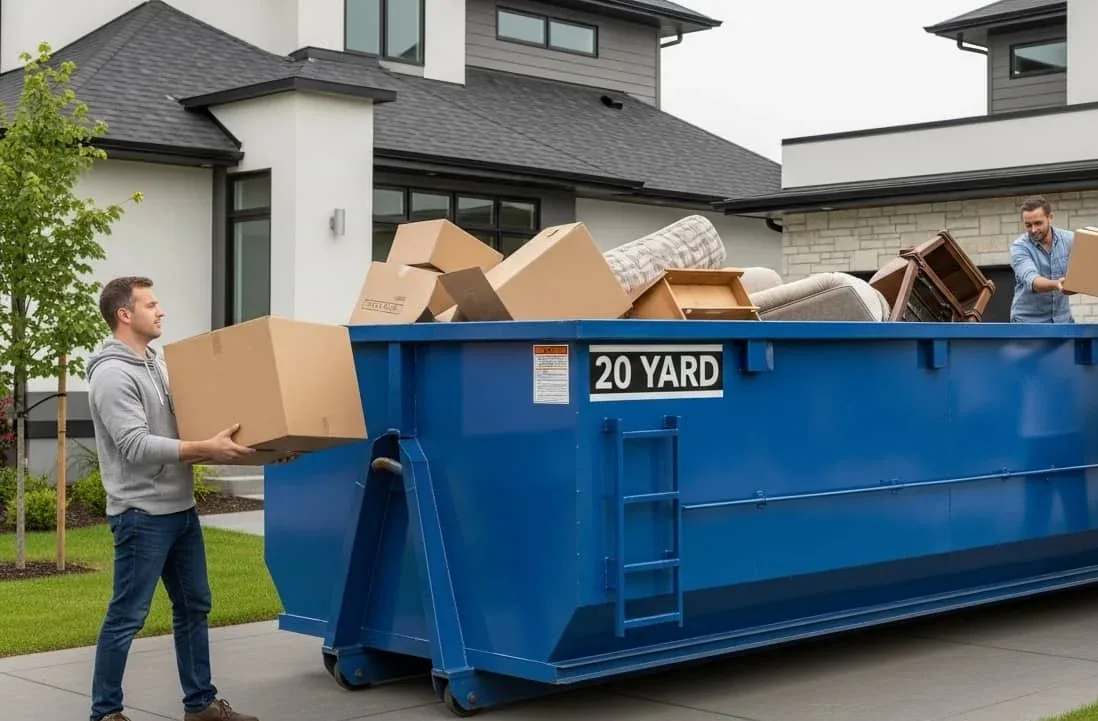
The pattern is hard to miss: a 20 square architectural tear-off is a 30 yard job, not a 20, because 8,000 pounds of laminated shingle sails past a 20 yard allowance while occupying maybe half the box. The container is chosen by the scale, not the sidewall. Our roofing dumpster rental pages cover the material differences in more detail.
Cedar over skip sheathing changes the job
Cedar was nailed to spaced boards — 1x3 or 1x4 strapping laid at the shingle exposure so air could move under the roof and dry it. Strip the cedar and you are looking at gaps, not a deck. Two things follow.
First, if you are converting to asphalt, the roof needs a continuous deck, so either plywood or OSB goes over the strapping or the strapping comes off entirely. Pulling the boards adds roughly 100 to 150 pounds a square of clean wood to the load and can push a 30 yard job to a 40. Second, cedar tear-off is slow and it does not shatter into flat, stackable pieces the way asphalt does, so it stacks loose and eats volume faster than its weight suggests.
Old cedar also comes off with a lot of hardware: three or four generations of repair nails, copper valley metal worth separating, and interlay felt that tears into ribbons.
Massachusetts bans ferrous and non-ferrous metals from disposal, so drip edge, step flashing, valley metal, old ridge vent and any copper are worth setting aside in a separate pile rather than shoveling into the box. The current list is published in the MassDEP waste disposal bans, and it also covers treated and untreated wood — relevant the moment your skip sheathing or a rotted deck board goes in.
MassDEP guidance on construction and demolition materials notes that loads over five cubic yards containing 20 percent or more by volume of wood, metal, concrete, brick or asphalt pavement may not be sent for disposal, which is why mixed roofing loads route through a processing facility. Asphalt shingles themselves are not on the ban list, though the EPA's guidance on sustainable management of construction and demolition materials makes the case for recycling them where an outlet exists. If you are unsure what belongs where, our guide to what can and cannot go in a dumpster covers the rest.
Underlayment is easy to forget and it adds up. Fifteen-pound felt runs about 15 pounds a square by definition, and self-adhered ice-and-water membrane at the eaves and valleys adds a little more. On a sound deck the membrane peels off in long strips with the shingles; on a soft one it comes off in shreds along with the top layer of plywood veneer.
Placement for a tear-off, not a cleanout
Roofing containers want to sit close to the eave, ideally within 10 to 15 feet, so shingles can be raked straight off the roof into the box instead of carried across the yard. Lean a sheet of plywood against the container's near wall as a backstop and the bounce rate drops to almost nothing.
Tarp everything under the drop zone: foundation plantings, the AC condenser, bulkhead doors, and any hydrangea you would rather not replace. Put plywood under the container rails on crushed shell, pea stone or a sealcoated driveway, which is standard practice on Chatham and Falmouth jobs and covered in detail in our notes on driveway protection. Never set a loaded roll-off over a leach field, D-box or septic tank lid — Title 5 systems are everywhere on the Cape and the repair bill dwarfs the rental.
If the box has to go on a public way, check the town first. Requirements differ, and our town-by-town permit guide saves a phone call. Run a magnet sweep across the drive and lawn before the truck comes back, because roofing nails and car tires find each other reliably.
Timing a Cape reroof around weather and season
Salt air and wind-driven rain age a roof faster here than twenty miles inland. Fasteners corrode, cedar erodes on the weather side, and asphalt granules go early on south and west exposures. Roofs on exposed shorefront lots tend to need attention sooner than the same roof in a wooded lot off Route 6A, so inspect on age plus exposure rather than age alone.
Practical scheduling: late fall through early spring gives you contractor availability and cool days for tear-off, but you need a genuine two or three day dry window and no nor'easter on the chart, because an opened roof and 40 mph gusts do not mix. May through June and September through October are the sweet spots. Mid-summer means competing with rental turnover traffic on Route 28 and tighter delivery slots, so book the container earlier than you think you need to.
Order the box to land the day before the crew starts. A tear-off crew waiting on a delivery is the most expensive hour of the project.
Get the size right the first time
Bring us three numbers — squares, material and layers — and we will tell you which container the weight math points to, honestly, including when a smaller box plus a swap beats a big one. Fifteen years of Cape roofs since 2011 means we have already hauled the version of your roof that surprises people. Call (774) 208-0570 for a flat-rate quote with delivery, pickup and disposal included, or reach us through our contact page for delivery windows and next-day availability.