
Cape Cod service
Roll-Off Dumpster Rental: How It Works on Cape Cod
A plain explanation of roll-off containers — how the truck sets one down, how much room it needs, what each size holds, and how swap-outs and pickup actually work.
- Licensed & insured
- Same-day on the Upper Cape
- Flat-rate pricing
- All 15 Cape towns
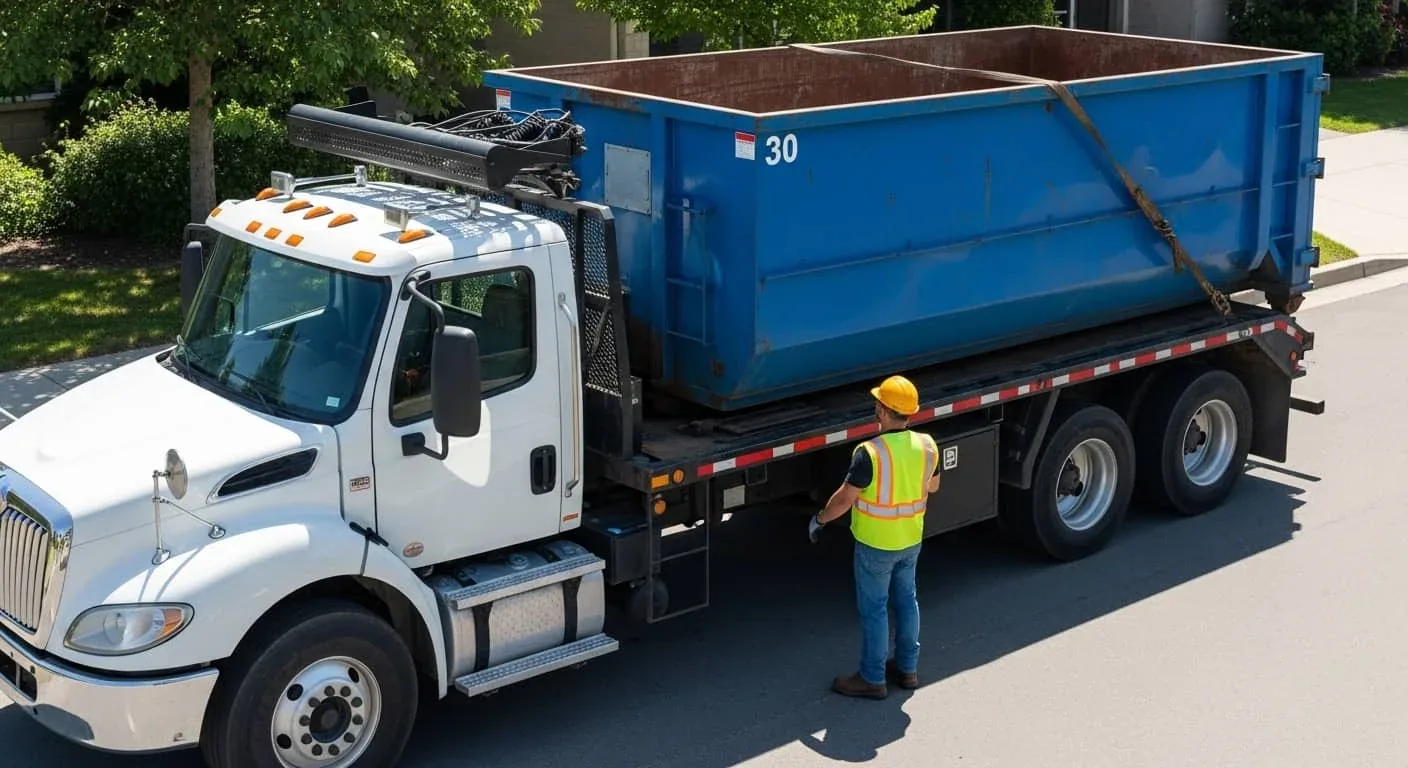
Roll-Off Dumpster Rental across all fifteen Cape Cod towns
The word "dumpster" covers two very different things. One is the wheeled bin behind a supermarket, emptied by a truck with front forks. The other is a roll-off: an open-top steel container with rails on the bottom that a specialized truck drags onto its bed with a winch cable and a hydraulic hoist. When someone rents a container for a renovation, a cleanout or a tear-off, they are renting a roll-off.
Understanding how one works changes the questions you ask. Instead of guessing at a size, you plan the approach, check the overhead, and pick a spot the truck can actually reach twice. This page covers the equipment itself — what the sizes mean, how much room the truck needs, what the tonnage allowance is for, and how swap-outs work — with Cape Cod conditions in mind. Call (774) 208-0570 for a flat quote once you know what you need.
At a glance
What you get with roll-off dumpster rental
- Open-top steel containers with a swing rear door for walk-in loading
- Five sizes from 10 to 40 cubic yards, all roughly 8 feet wide
- Delivered by hook-and-cable roll-off truck, set exactly where you point
- Cribbing laid under the rails on shell, stone and finished surfaces
- Flat-rate quotes covering delivery, rental, pickup and disposal
- Swap-outs available same-day or next-day to keep work moving
- Drivers who know Cape driveways, overhead wires and septic layouts
- One phone call to book, one to swap, one to end the rental
What a Roll-Off Container Actually Is
A roll-off is a rectangular open-top steel box built to be dragged, not lifted. Two heavy rails run the length of the underside. A hook or cable at the front end connects to the truck, and the container rolls on rear wheels up an inclined bed. That is the entire mechanism, and it explains most of the practical rules that follow.
Because it rolls rather than tips, the truck must be able to line up straight behind the container — not at an angle. Because it slides on rails, the surface underneath takes concentrated load along two narrow strips instead of spread evenly. And because the bed tilts to a steep angle during loading and unloading, the front of the box swings high in the air, well above the roofline of a single-story house.
Most roll-offs used for residential and light commercial work have a rear door on hinges that swings open, so debris can be walked or wheeled in at ground level rather than lifted over the wall. That door is the difference between an easy day and a miserable one on any job involving a wheelbarrow, appliances, or heavy furniture. Ask for it when you book. Sizes, footprints and wall heights are listed on the container size page, and the full list of services shows which container fits which job.
Sizes, Dimensions, and What a "Yard" Means
Container sizes are named for cubic yards of volume, not weight and not footprint. A cubic yard is a cube three feet on each side — roughly what fits in the bed of a standard pickup truck, filled level. So a 20 yard container holds about six to eight heaped pickup loads of loose material.
Length and width barely change across the range. Most roll-offs sit around eight feet wide and run somewhere between twelve and twenty-two feet long. What changes most is wall height, and that matters more than the yardage number for how a job feels.
| Size | Typical footprint | Wall height |
|---|---|---|
| 10 yard | about 14 ft long × 7.5 ft wide | roughly 3.5 ft — low, easy to toss into |
| 15 yard | about 16 ft long × 7.5 ft wide | roughly 4 to 4.5 ft |
| 20 yard | about 22 ft long × 7.5 ft wide | roughly 4.5 ft |
| 30 yard | about 22 ft long × 7.5 ft wide | roughly 6 ft — a real lift |
| 40 yard | about 22 ft long × 7.5 ft wide | roughly 8 ft — load through the door |
Dimensions vary between manufacturers, so confirm the actual box when you book if clearance is tight. The practical takeaway: 30 and 40 yard boxes add height, not floor area, which is why they suit bulky light debris and not heavy material. Our Cape Cod size guide works through choices by project.
Truck Access and How Much Room You Need
This is the part people underestimate. A roll-off truck is a heavy straight truck that has to back in, line up, and pay out a cable — and it needs far more room than the container's own footprint.
- Straight-line approach: plan on roughly 60 feet of clear, straight room behind where the container will sit.
- Width: about 10 to 12 feet for the truck to maneuver, more if it must turn.
- Overhead: the bed tilts high during loading, so low limbs, service drops to the house, cable and phone lines, canopies and porch overhangs are all blockers. Look up before you pick the spot.
- Surface: firm enough for a loaded truck, not just the empty box. Loose sand, soft spring lawn and freshly graded fill are where trucks get stuck.
On the Cape specifically, the usual obstacles are mature pitch pine limbs over a narrow drive, overhead service drops on older cottages, and shell or pea-stone drives that soften after rain. A phone photo of the intended spot, taken from the road looking in, answers almost every access question in advance and prevents a wasted trip. Detailed prep steps are in our guide to dumpster placement and driveway protection.
Flat-Rate Pricing and What the Quote Includes
Roll-off rentals here are quoted as one flat number covering four things: delivering the container, the rental period, hauling it away, and disposing of the contents up to the tonnage assigned to that size. There is no hourly billing and no per-trip charge inside the rental window.
What varies the quote is straightforward. Size sets the base. Material type sets the disposal cost — a clean load of brush, a clean load of concrete and a mixed cleanout load go to different facilities at different rates. Distance matters, because a run to Orleans or the Outer Cape is a longer haul than one in the Upper Cape towns. And weight past the included tonnage is billed per ton at the scale rate, with the ticket available.
The most common mistake is ordering by price rather than by fit. A cheaper small box that needs two extra swaps costs more than the right box ordered once. Conversely, a 40 yard filled with plaster and tile hits its weight limit less than half full — you paid for volume you cannot legally use. Describe the material honestly on the phone and the size recommendation follows from it. The variables are broken down further in our article on dumpster rental cost on Cape Cod.
Weight Limits, Tonnage, and What Belongs Inside
Volume and weight are two separate limits and you have to stay under both. Trucks are governed by road weight laws, so an overweight container is not a billing problem — it is a load that cannot legally leave your property until material comes out.
Roughly speaking, light bulky debris like furniture, cardboard, insulation and brush fills the box long before the scale matters. Dense material does the opposite: concrete, brick, tile, plaster, wet carpet, roofing shingles and soil reach the tonnage allowance with the container nowhere near full. That is why heavy material is best run in a small, dedicated concrete and heavy debris container rather than a big general one.
Most ordinary debris is fine inside: household goods, furniture, remodeling material, lumber, shingles, siding, decking, drywall and yard debris. The exclusions are largely dictated by state law rather than preference, and they hold no matter which size you rent — no liquids, no hazardous products, no pressurized cylinders, no tires, no appliances with refrigerant still in them, and no asbestos-containing material. Our reference on what can and cannot go in a dumpster covers the edge cases. Loads must also be level with the top rail so the tarp closes.
Rental Periods, Swap-Outs, and Pickup
A swap-out is simply a second delivery combined with a haul: the truck takes the full container and sets an empty one in the same spot, usually in one visit. Contractors run on swaps. Homeowners rarely need more than one.
- Quote and schedule. Call (774) 208-0570, describe the project and the access, get a flat number and a delivery window.
- Delivery. The truck backs in, lowers the bed, and rolls the container off the rails. Cribbing goes down first on soft or finished surfaces.
- Fill it. Heavy and flat on the floor, bulky on top, nothing above the rim.
- Swap or pick up. One call gets an empty box in the same spot, or ends the rental entirely. Same-day and next-day service is available, and off-season it is routine.
Booking rhythm on the Cape follows the season hard. November through April, next-day delivery is the norm and containers can sit for weeks. From Memorial Day through Labor Day, canal bridge and Route 6 traffic compresses the schedule, so reserve a few days out and take a morning window when offered. Need it today? Same-day dumpster rental exists for genuine emergencies. Coverage across all 15 towns is listed on the Cape Cod service area page.
Suitability
Is roll-off dumpster rental the right call?
The fastest way to get this right is to check the load against both lists before you book.
Good fits for this container
- Home renovations and remodel tear-outs
- Roof tear-offs and siding replacement
- Whole-house and estate cleanouts
- New construction and addition job sites
- Commercial refits and property turnovers
- Storm debris and downed limb cleanup
- Concrete, brick and other dense demolition material
Send these somewhere else
- Liquids of any kind, including paint, solvents, motor oil and antifreeze
- Propane tanks, oxygen and acetylene bottles, and any sealed pressurized cylinder
- Tires of any size, which Massachusetts bans from landfill disposal
- Refrigerators, freezers, window AC units and dehumidifiers with refrigerant still charged
- Mattresses and textiles, banned from Massachusetts disposal since November 2022
- Asbestos-containing building materials, which require licensed abatement and state notification
Sizing
Which container for roll-off dumpster rental?
Every size below runs on this service. Match the material to the weight allowance and the volume takes care of itself.
- 10 yard — The shortest walls in the lineup, around 3.5 feet, and the smallest footprint — the size to pick when access is tight or the material is dense enough that you will hit weight before volume.
- 15 yard — A middle box that still loads easily by hand. Adds length over the 10 without gaining much height, so it suits mixed debris where you need volume but not a ladder.
- 20 yard — Full 22-foot length at moderate wall height. The most commonly delivered size because it balances capacity against the space a Cape driveway can actually spare.
- 30 yard — Same footprint as the 20 but roughly six-foot walls. All the added capacity is vertical, so use the rear door and load through it rather than lifting over the side.
- 40 yard — Roughly eight-foot walls on the same 22-foot footprint. Only worth it for high-volume, low-density material and only where the truck has generous approach room.
| Size | Dimensions | Capacity | Weight included | Best for |
|---|---|---|---|---|
| 10 Yard Dumpster | typically about 12 ft long × 8 ft wide × 3.5 ft high | about 3-4 pickup truck loads | 1-2 tons | Heavy, dense debris and tight driveways: concrete, brick, tile, one-room gut. |
| 15 Yard Dumpster | typically about 16 ft long × 8 ft wide × 4 ft high | about 4-6 pickup truck loads | 2 tons | Two-room remodels, garage and shed cleanouts, small roof tear-offs. |
| 20 Yard Dumpster | typically about 22 ft long × 8 ft wide × 4.5 ft high | about 6-8 pickup truck loads | 2-3 tons | Full roof replacement, whole-floor renovation, three or four bedroom cleanout. |
| 30 Yard Dumpster | typically about 22 ft long × 8 ft wide × 6 ft high | about 9-12 pickup truck loads | 3-4 tons | Cottage gut renovation, whole-house estate cleanout, storm debris, demolition. |
| 40 Yard Dumpster | typically about 22 ft long × 8 ft wide × 8 ft high | about 12-16 pickup truck loads | 4-5 tons | Structural demolition, commercial and multi-unit work, high-volume bulky debris. |
Roll-Off Dumpster Rental — the Cape Cod specifics
Cape geography sets real limits on roll-off logistics. Every container that leaves the peninsula crosses the Bourne or Sagamore bridge, and summer congestion on Route 6 and Route 28 governs how many drops a truck completes in a day. Narrow village lanes in Provincetown, Chatham and Woods Hole, along with the historic stretch of Route 6A, leave little room to line up a sixty-foot approach.
Two site conditions matter more here than almost anywhere else. Sandy soil and shell or pea-stone driveways compress under concentrated rail loads, so cribbing is standard practice rather than a nicety. And most properties off the sewered village centers run on-site septic under the state's Title 5 septic system regulations — a loaded container over a leach field or distribution box can crush it, so mark yours before delivery.
What goes in the box is governed statewide by the MassDEP waste disposal bans, which is why tires, mattresses, appliances and clean wallboard are pulled from loads regardless of town. Local transfer stations generally require resident stickers, so a container often beats repeat trips.
Talk to a real person
Need roll-off dumpster rental on Cape Cod?
Call (774) 208-0570, describe the job in a sentence, and you will get a flat price and a delivery window on the same call.
Mon–Sat 7:00am – 6:00pm · Sun by appointment
Answers
Roll-Off Dumpster Rental — your questions answered
What is the difference between a roll-off dumpster and a regular dumpster?
A roll-off is an open-top steel container with rails underneath that a truck drags on and off with a cable and hoist. It is delivered for a defined project and taken away when you are done. A standard commercial dumpster is a smaller, permanently placed bin with a lid and lifting pockets, emptied on a route by a front- or rear-loading truck. For renovations, cleanouts and construction you want a roll-off, because you control the size and the timing.
How much space do I need for a roll-off dumpster and the truck?
The container itself takes roughly 8 feet of width and 14 to 22 feet of length depending on size. The truck needs considerably more: plan on about 60 feet of straight-line approach and 10 to 12 feet of width to maneuver, plus clear space overhead because the bed tilts high during loading. On a typical Cape driveway that means moving cars, boats and trailers before delivery day and checking for low limbs and service drops.
Will the driver put the dumpster exactly where I want it?
Within reason, yes. The limits are physics, not willingness: the truck must be able to line up straight behind the spot, the surface has to support a loaded vehicle, and there must be clear height overhead. Drivers will not place a loaded container over a septic tank, distribution box or leach field, or on a surface that will obviously fail. Marking the spot with cones or stakes and pointing out hazards gets you the placement you want.
Can I move the dumpster myself once it's been delivered?
No. Even an empty roll-off weighs thousands of pounds and there is nothing on it designed to be pushed, towed or levered by a vehicle you own. Attempts usually end with a damaged driveway, a bent rail, or an injury. If the spot turns out to be wrong, call and we will relocate it on site — that is a normal request, especially on job sites where staging shifts between phases.
What happens if I overfill the container above the top rail?
The load cannot legally be hauled. Roll-off loads have to sit level with the top rail so a tarp can be secured over them, and a driver who arrives to find debris mounded above the rim either waits while you pull material off or leaves and returns. Both cost time. If material is stacking high, call for a swap rather than pressing it down — an extra swap is cheaper than a failed pickup and a second trip charge.
Service area
Roll-Off Dumpster Rental across Cape Cod
We run roll-off containers out of our 19 Tradesman Cir yard in East Falmouth to all fifteen Cape Cod towns and the villages inside them — from Woods Hole and the Bourne bridges through the Mid Cape and Route 6A, out past the Orleans rotary and up the Outer Cape to Provincetown. Outer Cape runs are scheduled rather than same-day, and in July and August everything books up early. If your village is not listed, call anyway. We almost certainly get there.
Related services
Popular service areas
From the guides
- What a Dumpster Rental Actually Costs on Cape Cod (And What Drives the Number)
- What Can and Can't Go in a Dumpster in Massachusetts: The Cape Cod Rules Explained
- Do You Need a Permit for a Dumpster on Cape Cod? A Town-by-Town Guide
- Sizing a Dumpster for a Roof Tear-Off on Cape Cod: Asphalt, Cedar Shingle and Shake
- All articles