
What a Dumpster Rental Actually Costs on Cape Cod (And What Drives the Number)
An insider breakdown of how roll-off pricing is built on Cape Cod, why bridge traffic and Outer Cape mileage change the math, and what turns a cheap quote expensive.
ReadSeasonal & Property guide
Leaves and yard waste sit on the MassDEP disposal ban list, so a brush load is priced and handled differently from mixed debris. What that means for clearing a Cape property.
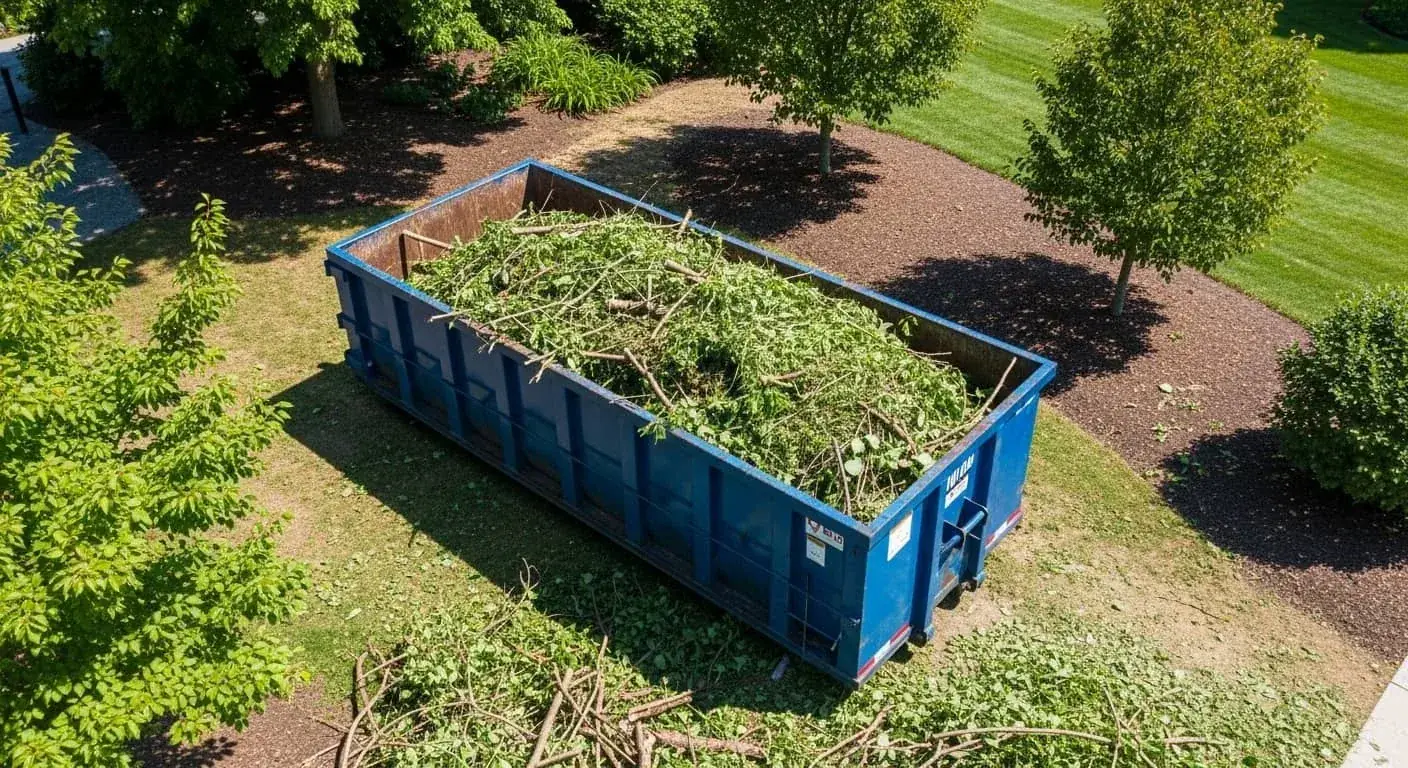
Clearing a Cape property throws off a strange kind of debris. It is bulky, springy, weighs almost nothing right up until it suddenly weighs a great deal, and unlike a load of torn-out carpet or cracked drywall, the state has a firm opinion about where it is allowed to end up. Leaves and yard waste sit on the Massachusetts disposal ban list. The brush pile at the end of your driveway cannot legally be buried in a landfill or fed to an incinerator as ordinary trash. It has to reach a facility that composts or grinds it.
That one rule shapes the rest: why a brush-only container is quoted differently from a mixed one, why a few kitchen bags thrown on top change what the load costs, and why stacking matters more with vegetation than with any other material we haul.
Massachusetts maintains a list of materials that may not be thrown away or sent to a disposal facility, and leaves and yard waste have been on it for decades. The current list also covers asphalt, brick and concrete, metals, clean gypsum wallboard, recyclable cardboard, whole tires, white goods and, since November 2022, mattresses and textiles. Read the whole thing on the MassDEP waste disposal bans page. Note that treated and untreated wood and whole tires are banned from landfills specifically, rather than from all disposal.
The practical version: vegetation is a commodity, not garbage. Clean brush becomes chips, mulch or compost, and the state actively promotes that through its composting and organics program. A processor will take a truckload of clean brush at a yard-waste rate. That same processor will refuse the load outright if it has trash in it, at which point the material has to be redirected to a mixed-waste facility and priced accordingly.
Clean means vegetation and nothing else. No plastic pots, landscape fabric, zip ties, wire or plastic plant tags. No bagged material unless the bags are compostable and the facility takes them. No pressure-treated fence rails buried in the middle of the pile, and no half-empty trash bags from the garage cleanout that happened the same weekend.
Homeowners underestimate this part. A brush load is a single unit at the scale house: either clean vegetation or mixed waste, with no partial credit. Drop four bags of household junk on nine yards of pruned oak and the whole container gets reclassified. On the Cape both jobs usually run at once, because the spring visit is when the shed gets emptied too. Book yard waste removal for the vegetation and handle the rest through junk removal or a second container. Two clean loads beat one contaminated one.
Pitch pine is the signature tree of the sandy Cape interior and the worst-behaved material we load. The branches are irregular, resinous and stubbornly springy. A limb tossed in whole holds a void around itself and refuses to settle, filling volume without adding weight — the wrong combination when you pay by the cubic yard.
Scrub oak is the opposite problem. It is dense, hard, and heavier per yard than people expect, especially when it is green. A container packed with scrub oak trunk sections can reach its tonnage allowance while it still looks half empty from the driveway.
Privet, arborvitae and hedge trimmings are the easiest vegetation to load: thin, flexible and happy to be trodden down. Grass clippings and leaves are fine loose, though bagging them in plastic defeats the point, since the bags come off again at the processor.
| Material | Goes in a brush container? | Where it goes instead, or what to know |
|---|---|---|
| Branches, limbs, pruned brush | Yes | Cut to length and stacked. This is the core of a clean load. |
| Leaves, grass clippings, garden waste | Yes, loose | Banned from disposal statewide. Do not bag in plastic. |
| Hedge and privet trimmings | Yes | Compacts well; tread it down as you fill. |
| Bittersweet, knotweed, other invasives | Ask first | Should not be home-composted or moved between properties. Tell us before pickup. |
| Poison ivy vines and roots | Yes, but flag it | Never burn it. Warn everyone handling the load, bag the roots, label the pile. |
| Stumps and root balls | Usually no | Weight and processor rules exclude them from standard containers. Call before adding any. |
| Sod, loam, soil, sand | Usually separate | Extremely heavy. Normally a dedicated small container and a separate arrangement. |
| Beach grass and dune plantings | Do not cut | Coastal dune vegetation is protected. Check with the conservation commission first. |
| Lumber, fencing, pressure-treated wood | No | Not vegetation. It contaminates a brush load; use a construction container. |
| Plastic pots, fabric, hoses, wire | No | Single biggest cause of a clean load being reclassified as mixed waste. |
Oriental bittersweet is everywhere on the Cape, strangling scrub oak and pulling down tree lines along Route 6A. It is illegal to import or sell in Massachusetts, and while nobody will cite you for cutting it out of your own hedgerow, moving it around is a bad idea. The berries are viable. A fruiting vine dumped at the back of someone else's lot, or thrown on a home compost heap that never gets hot enough, is next year's infestation.
The same logic applies to knotweed, which regenerates from fragments of root and stem. Keep invasive material out of the backyard compost, do not haul it to a friend's woodlot, and mention it when you book so the load reaches a processor that grinds and hot-composts. Get it off the site the same week you cut it.
This one gets Cape property owners in real trouble. American beach grass, bayberry, beach plum and the rest of the dune community are not landscaping you own outright. Coastal dunes and beaches are protected resource areas under the Massachusetts Wetlands Protection Act, and clearing or pruning naturally vegetated areas inside a resource area, or within the hundred-foot buffer around it, generally requires a filing with your town conservation commission. Many towns add stricter local bylaws.
Rule of thumb on a waterfront lot: mowing an established lawn and pruning an already-landscaped bed are usually fine; anything that changes naturally vegetated dune or bank is not a Saturday-morning decision. Call the conservation commission before the saw comes out. A restoration order costs far more than a filing.
Nothing you do affects the cost of a brush job more than how the pile goes into the box. Loose, tossed brush is mostly air. The same material cut to length and stacked in layers will hold dramatically more per container — commonly two or three times as much, depending on the species and how much you are willing to tread it down.
For sizing, a small pruning and cleanup job usually fits a 10 yard container, which is also the right box for anything soil-heavy. A full spring cleanup on a typical lot runs to a 15 yard, and clearing an overgrown half-acre or taking down several trees calls for a 20 yard. Our size guide works through the comparisons in more detail.
Three routes, and the right one depends on volume and on how much of your own time you want to spend.
Chipping on site makes sense when the material is mostly small-diameter and you have somewhere to put the chips. Nothing leaves the property, and the mulch is useful. It falls apart when there are trunk sections, root balls or thorny tangles a chipper cannot swallow.
Hauling it yourself to the town facility works for a couple of pickup loads. Most Cape towns run their own transfer station, disposal area or recycling center rather than sharing one county site, and access generally requires a paid resident sticker or permit. Some accept brush at a separate yard-waste area with its own hours, and some run a spring brush collection. Rules, fees and accepted materials vary town to town, so check your town's official website or call the facility first. Past three or four truckloads, the driving stops being worth it.
A container wins on anything larger, on anything with a deadline, and on any job where mixed material is unavoidable. It sits on the driveway, you fill it at your own pace, and one truck handles the disposal side. In Falmouth, Brewster and everywhere in between, that is what most multi-day clearing jobs end up using.
Massachusetts does have an open burning season. Per the state's open burning safety guidance, it runs January 15 to May 1, burning is allowed only between 10:00 a.m. and 4:00 p.m., and permits come from your local fire department, never from the state. Open burning is prohibited outright in twenty-two densely settled communities, none in Barnstable County. That does not mean every Cape fire department issues permits freely, or that every day is an approved burn day. Air quality and local conditions decide that.
The material limits are where plans usually collapse. Brush, forestry debris and agricultural prunings may be burned. Leaves, grass, hay, stumps, tires, construction and demolition material, and household trash may not. Neither may brush generated by commercial or industrial land clearing, which rules burning out for most contractor work. Poison ivy must never go on a fire under any circumstances — burning it aerosolizes the urushiol oil, and inhaling that smoke is a medical emergency, not a rash. Call your fire department before you plan around burning anything.
Property work here follows a rhythm. Spring cleanup starts as soon as the ground firms up, colliding with the rush to open seasonal houses before Memorial Day. Storm season brings its own pile: a nor'easter or a tropical remnant drops limbs across driveways and roofs, and that material mixes vegetation with shingles, fence sections and torn screening, which makes it storm debris rather than clean brush. Our storm cleanup guide covers separating the two. Then comes the fall cutback before the house is buttoned up for winter.
Each of those windows fills the schedule fast, so book ahead. If you are unsure whether your pile counts as clean brush, mixed debris or something needing its own arrangement, describe it to us and we will tell you straight, including when a trip to the transfer station beats anything we can offer. Our what goes in a dumpster guide covers the wider ban list.
CC Dumpster Rental Cape Cod has been clearing Cape properties since 2011: fifteen years of pitch pine, bittersweet and post-storm mess. Flat-rate pricing covers delivery, pickup, the rental period and disposal up to the stated tonnage, with same-day and next-day delivery often available. Call (774) 208-0570 for a flat quote on a brush container, or see the contact page for service across all fifteen Cape towns.
Talk to a real person
Call (774) 208-0570 and describe the job. Flat price, stated tonnage allowance, and a delivery window on the same call.
Mon–Sat 7:00am – 6:00pm · Sun by appointment
From this guide
<p>Small amounts mixed into a general cleanout load are handled as mixed waste, but leaves and yard waste are on the MassDEP disposal ban list, so bulk vegetation cannot simply be buried or incinerated with trash. For any real volume of brush, ask for a yard waste container. Keeping the load clean vegetation lets it go to a composting or grinding facility, which is normally the cheaper route.</p>
<p>The whole container gets reclassified. A processor takes clean brush at a yard-waste rate and refuses a contaminated load outright, so the material has to be redirected to a mixed-waste facility and priced as mixed debris. There is no partial credit at the scale house. If you have household junk and brush at the same time, keep them in separate containers.</p>
<p>Usually not. Stumps and root balls carry enormous weight, often hold sand and stone in the roots, and many processors will not accept them in a brush load at all. They typically need a separate arrangement. Call before you drag one to the container so we can tell you what your options are for that specific piece.</p>
<p>Generally no, not without approval. Coastal dunes and beaches are protected resource areas under the Massachusetts Wetlands Protection Act, and clearing or pruning naturally vegetated areas within a resource area or its hundred-foot buffer zone normally requires a filing with your town conservation commission. Many Cape towns add stricter local bylaws. Call the conservation commission before any cutting near a dune or bank.</p>
<p>Rarely, and often it is not permitted. Massachusetts open burning runs January 15 to May 1 with permits issued only by your local fire department, and daily approval depends on conditions. Leaves, grass, stumps and brush from commercial land clearing may not be burned at all, and poison ivy must never be burned under any circumstances. Check with your fire department before planning around it.</p>
Keep reading
An insider breakdown of how roll-off pricing is built on Cape Cod, why bridge traffic and Outer Cape mileage change the math, and what turns a cheap quote expensive.
ReadMassDEP bans fourteen materials from disposal statewide, and those bans are where surprise dumpster fees come from. A plain-English reference on what goes in, what stays out, and where prohibited items go on Cape Cod.
ReadAn honest look at Cape Cod dumpster permits: the one town with a published rule, the fourteen where nothing is posted, and exactly who to call in each before you book a delivery.
Read