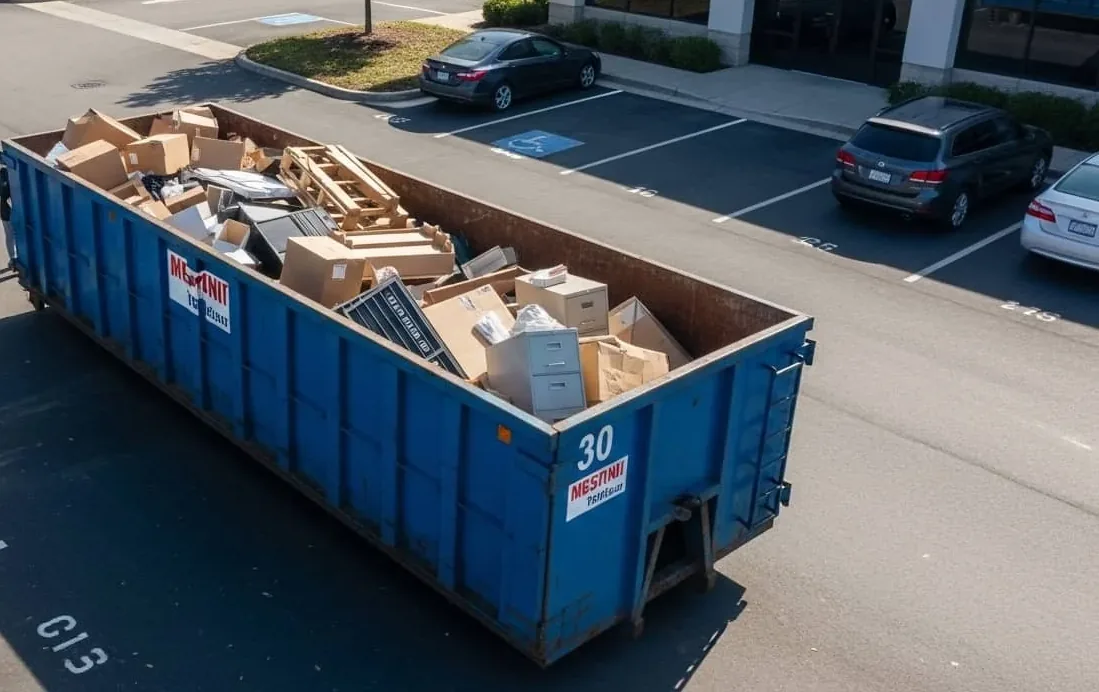
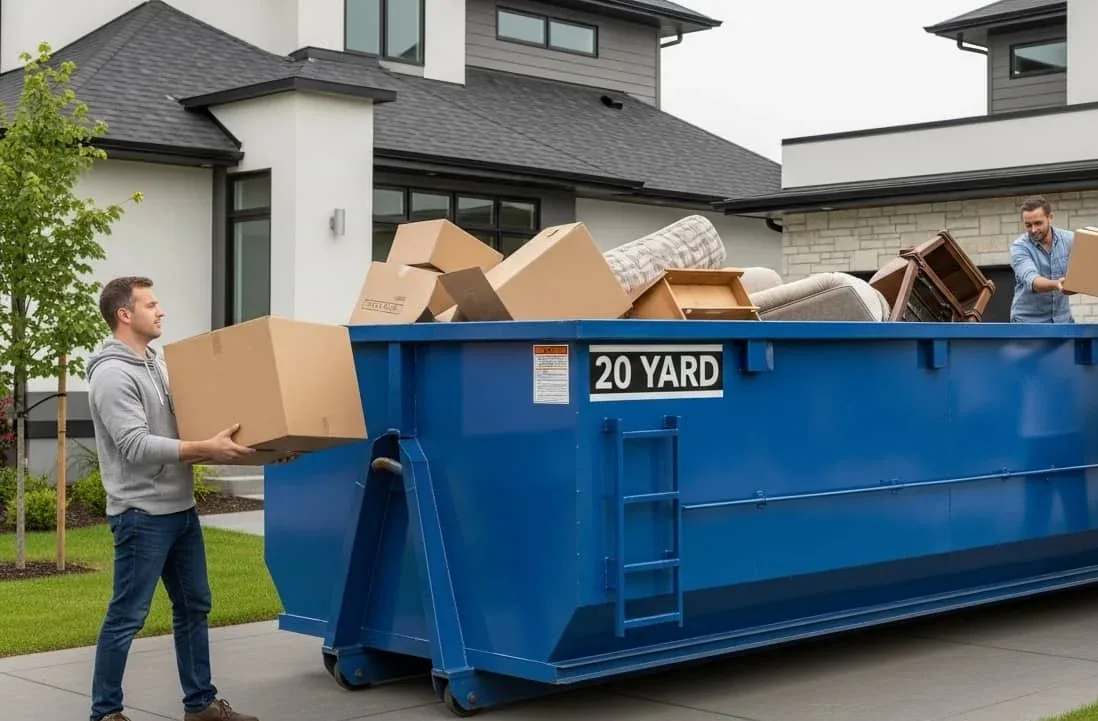
A homeowner in West Yarmouth fills a 20 yard container over a long weekend. Old carpet, a bedroom set, two mattresses, the flattened cartons from a new washer and dryer, a dead window air conditioner, and the last third of a fieldstone wall that finally gave up. The box gets hauled Monday morning. Thursday, the invoice shows up with three line items nobody planned for. None of that material was exotic. Every problem item on that load appears on a published state list that has been enforced in Massachusetts for years.
That list is the most useful thing a Cape Cod homeowner can learn before renting a roll-off. Understand it once and disposal charges stop being a surprise.
Your load goes to a sorting floor, not a hole in the ground
The mental picture most people carry is wrong. A loaded container does not get driven to a pit and tipped over the edge. On Cape Cod it goes to a construction and demolition processing facility or a transfer station, where it is dumped onto a concrete floor and worked over by a machine operator and, often, a crew picking by hand. Cardboard comes out. Metal comes out. Wallboard, concrete, mattresses and brush get pulled and routed to separate outlets.
Those facilities are inspected. MassDEP runs ongoing inspections at disposal and combustion sites to identify haulers and generators sending banned material, and certified third-party inspectors record what they find on load observation worksheets. A facility that keeps taking bad loads risks its own permit, so it protects itself by charging the problem back to whoever sent it. The hauler passes that along to the customer. There is the mystery fee, start to finish.
The MassDEP waste bans, in plain English
Massachusetts maintains a list of materials banned from disposal, or from transfer for disposal, statewide. It is real, it is public, and you can read the whole thing on the MassDEP waste disposal bans guide at mass.gov. Fourteen categories are on it. Two of them, mattresses and textiles, were added effective November 1, 2022, which is why longtime Cape contractors sometimes give outdated advice about tossing a mattress in the box.
What a ban means when you are the one filling the container
A ban is not a criminal matter for someone cleaning out a garage. Nobody is issuing a citation over a bundle of cardboard. What a ban does is make the material expensive at the far end, and that expense travels back up the chain to you.
- Separation is cheaper than sorting. Ten minutes stacking cardboard by the garage door costs nothing. Having a processing facility pull that same cardboard off a tipping floor costs real money.
- Mixed loads get priced for the worst thing in them. One mattress buried under drywall can change how an entire load is handled.
- Tell your hauler up front. Banned material is not something to smuggle past anyone. Say what you have before delivery and it gets routed correctly, almost always for less than a charge-back. Our dumpster rental FAQ page covers the common judgment calls.
What goes in with no trouble
Most of what comes out of a Cape house is straightforward. General household junk, furniture that is not a mattress, carpet and padding, non-recyclable packaging, toys, bagged trash. On the construction side: dimensional lumber, plywood, trim, subfloor, cabinetry, plaster and lath, insulation, non-asbestos flooring, doors, windows and asphalt shingles. A standard residential dumpster rental handles all of it in one container.
Roofing behaves well too. Tear-off shingles are heavy but not banned, and a roofing dumpster sized to the square footage is the normal answer. For interior demolition, a 20 yard dumpster is the workhorse on a kitchen or a couple of rooms, while a 10 yard dumpster exists mostly because dense material hits a weight limit long before it fills a big box.
What has to be kept separate
These items are legal to generate and easy to handle. They simply cannot ride along in a mixed load.
Concrete, brick, asphalt and stone
Patio slab, retaining wall block, chimney rubble, the shell driveway apron that got torn up. This material is dense enough to hit a weight limit in a half-filled box, so it moves in a dedicated concrete and heavy debris container.
Brush, leaves and yard waste
Storm season here produces mountains of pitch pine limbs, scrub oak and bittersweet. All of it is banned from disposal and all of it is compostable, which is why yard waste removal runs on a separate container and a separate outlet. Our guide to brush and yard waste disposal on Cape Cod covers the town-by-town options.
Metal, appliances and electronics
Scrap steel and aluminum have positive value, so set them aside. Appliances holding refrigerant, meaning refrigerators, freezers, dehumidifiers and window air conditioners, require certified refrigerant recovery before scrapping, and that has to happen before the unit is crushed.
Mattresses and textiles
Two of the most common surprises in a full-house clearing job, banned since November 2022. Plan for them at the start rather than discovering them on the last trip out.
What can never go in a dumpster, anywhere, ever
This category is different. Everything above is a recoverable material sitting in the wrong container. These are genuinely hazardous, and no roll-off company on the Cape will take them.
- Liquid paint, stains, varnish and solvents. Latex paint fully dried out with hardener or kitty litter is often acceptable as solid waste, but ask first. Oil-based paint is hazardous, always.
- Gasoline, diesel, kerosene, motor oil, antifreeze and lighter fluid.
- Propane tanks of any size, from the camping cylinder to the grill twenty-pounder. A sealed pressure vessel in a crusher is a real hazard.
- Pesticides, herbicides and pool chemicals.
- Asbestos. Common in Cape houses built before the mid-1980s: pipe wrap, floor tile, sheet flooring backing, siding shingles, boiler insulation. Asbestos work in Massachusetts is a licensed activity with notification requirements. Do not demo suspect material yourself, and never put it in a container.
- Ammunition, flares, fireworks and anything explosive. Call the police department non-emergency line about ammunition and old marine flares.
- Medical waste and sharps. Needles and lancets need a proper sharps program.
- Refrigerant-bearing appliances until the refrigerant has been professionally recovered.
- Fluorescent tubes and CFL bulbs, mercury thermostats and thermometers.
The federal overview of household hazardous waste from the EPA explains why these products get handled differently. They burn, react, corrode or poison, and they do all of that just as well inside a steel box in your driveway.
Quick reference: goes in, keeps out, where it goes instead
Where the prohibited items actually go on Cape Cod
Cape towns each run their own transfer station, disposal area or recycling center rather than sharing one county facility, and access generally requires a paid resident sticker or permit. Bourne, Sandwich, Falmouth and Mashpee are served by the Upper Cape Regional Transfer Station in Bourne. Fees, hours and accepted materials vary, so check your town's page before loading the truck.
Household hazardous waste days
Paint, solvents, pesticides, pool chemicals and automotive fluids go to a household hazardous waste collection, which most towns hold on scheduled dates rather than year round. Barnstable County's Cooperative Extension coordinates the regional effort through its waste reduction and recycling program, which links out to each town's schedule and brochure. Put the date on your calendar before starting a project that will generate any of it.
Retailer and take-back routes
- Lead acid batteries: auto parts stores take them back and typically pay a core credit.
- Propane tanks: exchange cages at hardware stores and gas stations, or your town's designated drop-off.
- Motor oil and antifreeze: many service stations and transfer stations accept them.
- Mattresses: most retailers haul the old set away on delivery, and several towns run their own collection.
- Electronics: transfer station electronics areas, usually for a per-item fee.
- Rechargeable batteries and CFL bulbs: hardware and home improvement retailers commonly host collection boxes.
Two Cape-specific traps
Weight comes first. Antique Capes and 19th century houses are full of plaster and lath, which runs two to three times the weight of drywall, and a container that looks half empty can already be over tonnage. Gutting an old house means sizing up: a 30 yard dumpster at partial fill often costs less than a small one that goes over weight. Our breakdown of Cape Cod dumpster rental costs explains how overages get calculated.
Sequencing comes second. Summer turnover work in Falmouth and the other rental-heavy towns happens in one frantic week, which is exactly when mattresses, textiles and cardboard end up thrown together in a single box. Pull the banned material first, stage it somewhere, then fill the container with what is left.
Call before you fill it
Nate Souza has been running containers on Cape Cod since 2011, and fifteen years of loads means we have seen every version of this problem. Describe what you are clearing before the container arrives and we will tell you what can ride along, what needs its own box, and what has to go somewhere else entirely. Flat-rate pricing, disposal included up to the stated tonnage, no guessing at the far end. Call (774) 208-0570 for a straight answer and a flat quote, or reach our East Falmouth office to schedule a drop.