Cape Cod does not run on a normal twelve-month calendar. It runs on about fourteen good weeks, a pair of shoulder seasons that pay better than most owners expect, and a long off-season where all the real work has to fit. Every day a house sits empty in July costs you a week of March. That single fact shapes when you clean out, when you renovate, and how long a container can realistically sit in the driveway.
What follows is the playbook the best property managers here already use: the annual sequence, the mid-season Saturday scramble, and the disposal rules that have changed enough recently to catch experienced owners off guard.
The compressed season is the whole problem
Trades on the Cape are booked around the same bottleneck you are. Roofers, painters, floor guys and septic contractors all want the same October-to-April window, because that is when houses are empty and dumpsters can sit for a week without costing anyone rental income. Come Memorial Day, the same crews are doing patch work at 7 a.m. between checkouts.
The practical result: big projects belong to the off-season, medium projects to the shoulder weeks in May and September, and anything between the Fourth of July and Labor Day gets measured in hours, not days. Owners who fight that calendar pay rush rates and lose bookings. Owners who plan around it get better crews and a container that shows up when they asked for it.
A season-by-season turnover calendar
Every property is different, but the sequence below holds up across most of the Cape's rental stock.
Refresh or real cleanout — decide before you book
A refresh is cosmetic. New linens, a coat of paint in the high-traffic rooms, replacing the four dining chairs that wobble, hauling out one broken grill. That is a pickup truck and an afternoon, or a single junk removal visit where someone else does the lifting.
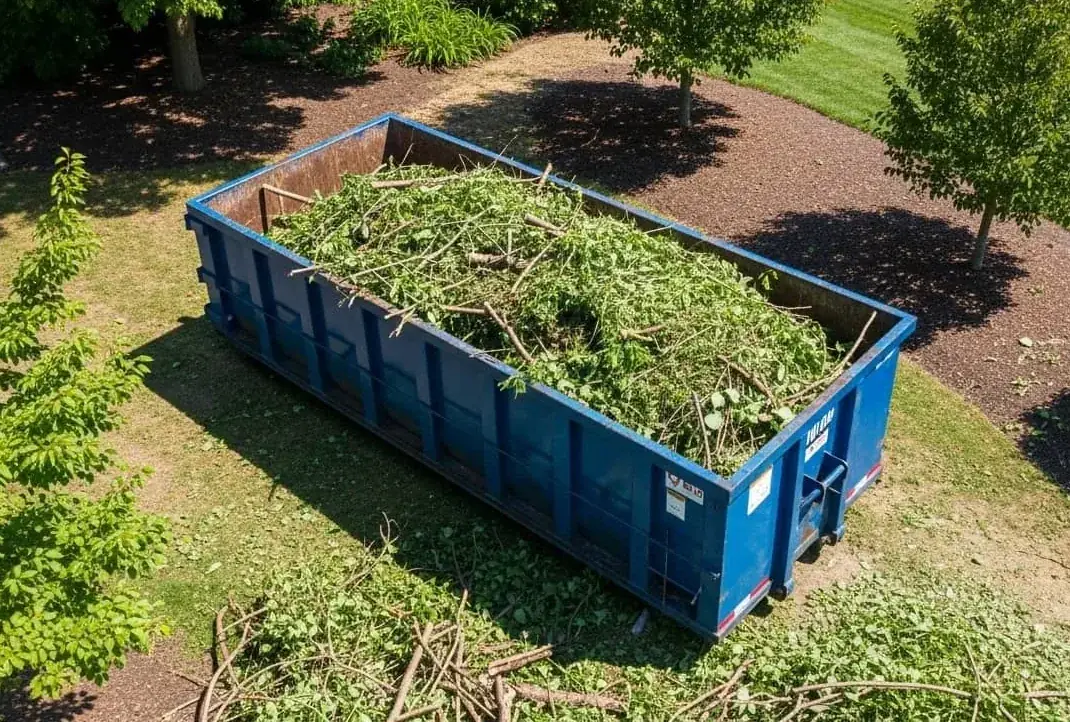
A real cleanout is different in kind. You are emptying closets that have not been opened since the house changed hands, pulling carpet, replacing every mattress on the second floor, and clearing a basement or crawlspace full of gear that three sets of guests left behind. That is a container job, and undersizing it is the most common mistake we see. A 15 yard dumpster handles a thorough two- or three-bedroom cottage reset. Once carpet, furniture and a full basement are in play, a 20 yard dumpster is the safer call — the second container you did not plan for always costs more than the extra capacity would have.
Managers running several properties in one town often stage a larger container at one address and work the portfolio over a week. That prices differently than a one-off residential rental, so if you handle more than a couple of houses, ask about commercial dumpster rental before booking each property separately.
What a season actually leaves behind
Guests are hard on houses in specific, predictable ways. After fifteen years of hauling from Cape rentals, the October load looks remarkably similar from Bourne to Provincetown:
- Mattresses and box springs — the highest-volume item in any rental cleanout and now the most regulated.
- Outdoor furniture that salt air has finished off: rusted frames, cracked resin, sun-bleached cushions.
- Grills, usually with a propane tank still attached. Tanks come off and go back to a dealer or a household hazardous waste day — never in the container.
- Beach gear and bikes — chairs with broken hinges, umbrellas with bent ribs, boogie boards, and the corroded beach cruiser nobody claimed.
- Small appliances: coffee makers, blenders, window units, fans.
- Textiles — linens, towels, curtains, the abandoned clothing pile.
- Carpet and area rugs, which absorb sand and moisture and rarely survive three seasons.
Sorting that pile in advance is what keeps a turnover on schedule. Our guide to what can and cannot go in a dumpster covers the items that have to be pulled out before the truck arrives.
Mattresses, textiles and the items you cannot simply throw away
Since November 1, 2022, Massachusetts has banned mattresses and textiles from disposal statewide. This is not a guideline. Under the MassDEP waste disposal bans, both materials sit on the same list as metal, clean gypsum wallboard, whole tires and yard waste.
Mattresses and box springs
The regulation defines mattresses to include any foundation or box spring, so a set counts as two units. They have to be routed to recycling rather than landfilled or incinerated. There is a narrow exemption: units contaminated with mold, bodily fluids, insects, oil or hazardous substances cannot be recycled and may be disposed of, provided the condition is genuine and documented. Storing mattresses uncovered in a damp basement until they qualify is not a strategy — deliberately contaminating them to dodge recycling violates the rules. MassDEP's mattress recycling guidance lays out the routes for residents, businesses and municipalities.
Textiles
The textile ban covers clothing, footwear, bedding, towels, curtains, fabric and similar products, and worn, torn or stained material still qualifies for recycling. The same contamination exemption applies. If you are clearing linen closets at four properties, bag textiles separately and route them through a collection program rather than the container. The state's clothing and textile recovery resources are the place to start.
Tell your hauler your mattress count when you book, not when the truck is in the driveway. Separate handling means separate pricing, and it is a short conversation up front instead of a rescheduled pickup.
Donate first, but watch the calendar
Plenty of what comes out of a rental is perfectly usable — a sofa that outlived the decor, a dresser, a working microwave, dishes and cookware in quantity. Reuse outlets on the Cape will take a fair amount of it, and every piece that leaves by donation is weight you do not pay to dispose of.
Two cautions. Policies vary by organization and change season to season, and most will not take upholstered furniture with stains, tears or any hint of moisture, so call the specific location before you load a truck. Timing matters too: intake tends to slow in late fall as storage fills and hours shorten, which is exactly when most owners do their big cleanout. Photograph the donation pile in September, make your calls, and get items out the door before the container arrives. Whatever is left is genuine disposal. The same sequencing applies to a full house clear-out, which we cover under estate cleanout.
The Saturday-to-Saturday turn
Mid-season, you have a window that opens at 10 a.m. Saturday and closes at 4 p.m. Saturday. Cleaners are already in the house. A container in that window is a specialized move, not a normal rental.
What works: a small container delivered Friday evening or first thing Saturday morning, staged in a spot that does not block the cleaning crew's parking, loaded fast, pulled Sunday or Monday. What does not work is expecting to sort, donate and demo inside six hours. If a mid-season problem is bigger than a fast load — water damage, a failed bathroom, a bedbug situation that means every mattress goes — the honest answer is usually to block a few days of booking rather than fake a turnover. Losing three nights in August hurts less than a one-star review and a refund.
Booking in July and August, and the bridge factor
Everyone calls at once. The Saturday before the Fourth, the second week of August, and the weekend after Labor Day are the three predictable crunches, and same-day availability disappears first in the high-density rental towns. Call two to three weeks ahead for in-season work if you can, and give a date range instead of a single hour.
Traffic is a real scheduling input, not an excuse. Backups at the Sagamore and Bourne bridges and along Route 6 routinely push morning delivery windows, and a truck heading down-Cape past Orleans on a Friday in July is working with a different clock than the same truck in February. Ask for a first-thing-in-the-morning slot when the turn is tight, and build a buffer on either side. Canal bridge work has made those windows less predictable, so check current conditions before committing to a hard time.
Placement when you are not standing there
Most rental owners are not on site for delivery, which means everything the driver needs has to be written down in advance. Include the gate or lockbox code, the exact placement spot, where the truck can turn around, and a phone number that will actually be answered.
Cape-specific hazards worth naming in your instructions:
- Septic. A loaded roll-off must never sit over a leach field, tank or distribution box. If you do not know where yours is, find out before delivery day — a collapsed D-box is a five-figure problem and it happens.
- Driveways. Crushed shell, pea stone and sand shift under weight. Plywood cribbing under the rails is standard practice; our notes on driveway protection and placement go deeper.
- Overhead. Pitch pine limbs and low utility drops on narrow lanes in villages like Harwich and Dennis catch more trucks than tight driveways do.
- Public way. If the only spot is the street, you likely need a permit. Requirements differ by town — see our town-by-town permit guide.
Insurance, liability and a container on a rented property
A roll-off on a property you rent out is an attractive nuisance, and guests will treat it as free disposal. Two things protect you. Confirm your hauler is licensed and insured and ask for a certificate of insurance if your policy or your management agreement requires one — most commercial carriers will want it on file. Then treat the container as a job-site item: no rental period that overlaps a guest stay if you can avoid it, reflective marking if it sits anywhere near a travel lane after dark, and a note to your cleaners that it is not for household trash.
Check your landlord or short-term rental policy language too. Some carriers care about contractor equipment left on site between bookings, and a call to your agent in March beats a claim conversation in August.
Get your turnover dates on the calendar
The owners who never lose a week are the ones who booked their October container in August and their spring project container in January. We deliver across all fifteen Cape towns, handle mattresses and textiles the way the state requires, and will tell you honestly whether your job needs a container or a crew. Call (774) 208-0570 for a flat quote with delivery, pickup and disposal included, or reach us through our contact page to lock in a turnover window before the season fills up.